Currently Empty: ₹0.00
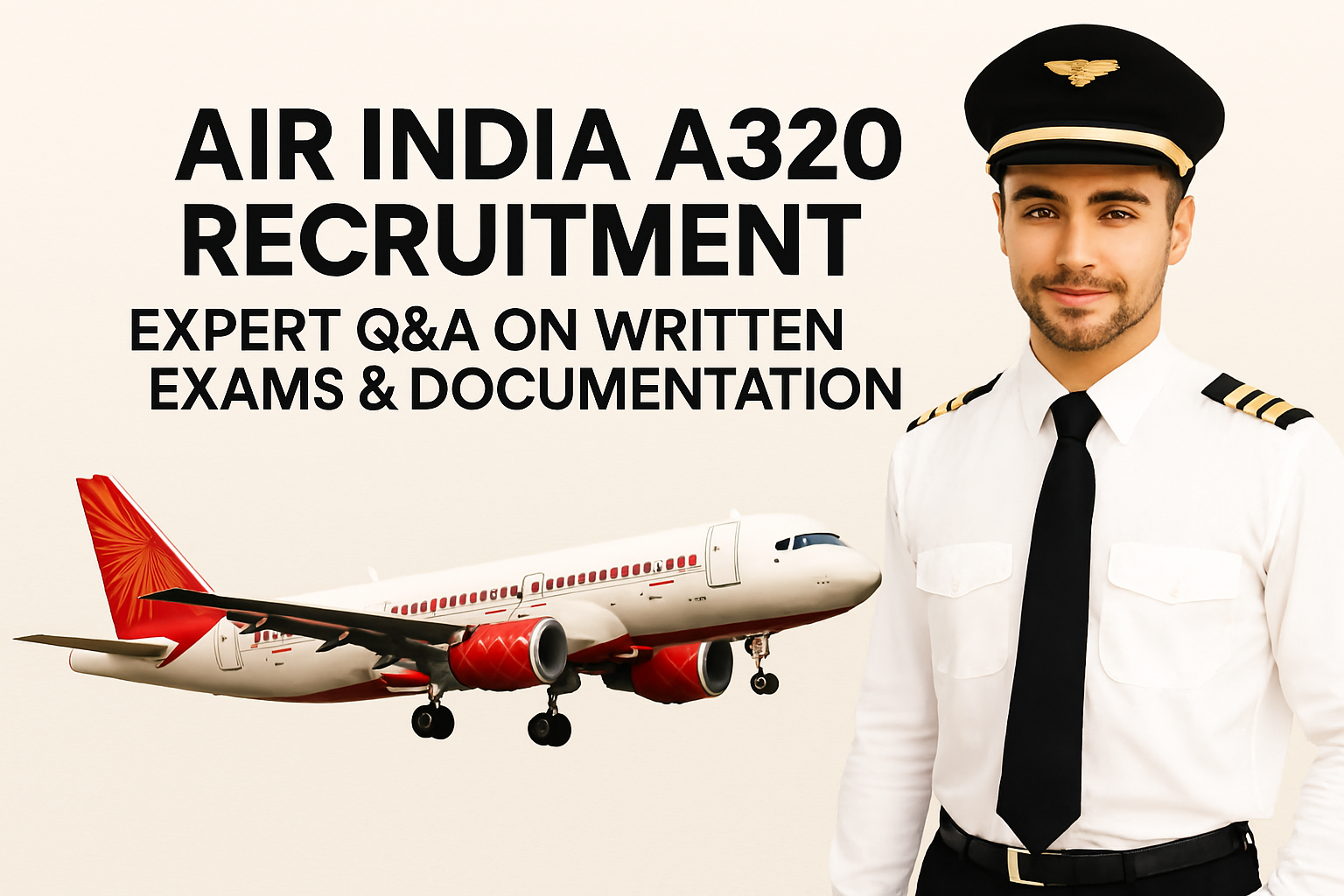
Air India’s A320 pilot recruitment has always attracted intense attention from trainee pilots and experienced first officers alike. With the Trainee Pilot Exam 2026 on the horizon, aspirants are actively searching for clarity on written exams, documentation requirements, and the most effective preparation strategies. This expert-led Q&A style guide is designed specifically for the Indian aviation context—clear, practical, and exam-focused—without hype or brand promotion.
Whether you are preparing through Airbus A320 online training or revising independently, this article will help you understand what truly matters for A320 pilot recruitment at Air India.
The Selection Roadmap: What to Expect
The recruitment process for 2026 follows a multi-stage funnel designed to filter for technical proficiency, psychological resilience, and cultural fit.
| Stage | Focus Area | Details |
| Stage 1 | Written Test | Technical (CPL + A320) & Aptitude |
| Stage 2 | Psychometric Assessment | Behavioural traits & stress management |
| Stage 3 | Group Discussion (GD) | Teamwork, communication & logic |
| Stage 4 | Personal Interview | Technical panel & HR evaluation |
| Stage 5 | Simulator Assessment (SPAC) | Practical flying skills & SOP adherence |
| Stage 6 | Medical Examination | Final Pre-Employment Medical Clearance |
Eligibility & Academic Requirements
Before diving into technical prep, ensure you meet the fundamental baseline set for the 2026 intake.
- Nationality: Indian Nationals or Overseas Citizens of India (OCI).
- Maximum Age: Up to 30 years (Check specific notification for category relaxations).
- Academic Foundation: 10+2 with Physics & Mathematics from a recognised Board/University.
Technical Qualifications:
For this specific drive, the airline is recruiting CPL/ATPL holders with a valid A320 Endorsement. The following must be Current at the time of joining:
Mandatory Licenses & Ratings
- CPL/ATPL: Issued by DGCA, India.
- Type Rating: Valid A320 Endorsement & Instrument Rating (IR) on A320 aircraft.
- Radio Telephony: Current RTR (A), RTP (P), or RTR (C) issued by WPC.
- Fitness & Language: Class-I Medical (DGCA) and a valid ELP (Level 4 or above).
- Digital Profile: Mandatory eGCA-ID with all licenses and documents validated.
Note: Candidates awaiting the issuance or renewal of their license or endorsement from the Regulatory Body are still eligible to apply, provided they are current at the time of joining.
Cracking the Written Exam: 2026 Strategy
The written exam for the A320 Air India Training for Trainee Pilot Exam 2026 is designed to test both foundational knowledge and type-specific expertise.
1. The Written Test Pattern
The test typically consists of approximately 60 multiple-choice questions (MCQs) to be completed in 75 minutes. For Type-Rated candidates, the paper is split:
- 30 Questions: Core CPL subjects (Met, Nav, Regs, Gen Tech).
- 30 Questions: A320 Systems and Technical specifics.
2. A320 Systems Deep-Dive
Since this recruitment is for A320-rated pilots, expect high-level questions on:
- Flight Control Laws: Protection logic in Normal, Alternate, and Direct Law.
- Electrical & Hydraulics: System redundancies and “what-if” failure scenarios.
- Auto Flight & FMS: Managed vs. Selected guidance and FMGS logic.
What Is the A320 Air India Written Exam?
The written assessment is designed to test type-specific knowledge and airline-oriented operational understanding rather than generic CPL theory. Questions are typically framed to evaluate how well a pilot understands the Airbus philosophy and real-world line operations.
Key Syllabus Areas
- A320 systems (ATA-wise focus)
- Flight control laws and protections
- Autoflight and FMGS logic
- ECAM philosophy and limitations
- Performance basics and limitations
- SOP-based scenario questions
Many aspirants underestimate the depth of questioning, which is why focused preparation like an A320 Air India Crash Course (Written Exam) style revision becomes relevant closer to the exam date.
How Is the 2026 Written Exam Different?
Based on recent trends, the A320 Air India Crash Course Written Exam pattern has evolved in three important ways:
- Conceptual Questions Over Memory-Based
Simple “what is” questions are being replaced with “why” and “what happens if” scenarios. - Operational Relevance
Questions increasingly mirror line operations rather than textbook definitions. - Time Pressure
The exam tests not just knowledge, but speed and accuracy under pressure.
Group Discussion (GD) Process
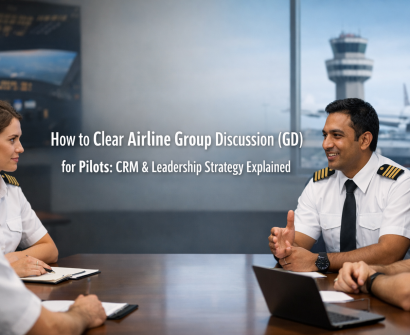
The Group Discussion stage is where the airline evaluates your “Soft Skills”—a critical component for any future commander. Unlike a debate, the GD is a test of Crew Resource Management (CRM) in a ground environment.
1. The GD Format
- Group Size: 8 to 12 candidates.
- Duration: 15 to 20 minutes.
- Objective: Reach a consensus or discuss a specific aviation/social scenario.
2. Recent GD Topics (2025-2026 Trends)
Recruiters have shifted toward situational and ethics-based topics:
- Aviation Safety vs. Passenger Convenience: Which should take precedence during a technical delay?
- Team Management Under Stress: How to handle a non-cooperative crew member.
- Automation in Cockpits: Is it a safety net or a skill eroder?
- Knowledge vs. Wisdom: Which is more vital for a First Officer?
3. Expert Tips for Success
- Be a Facilitator: Don’t just speak; listen. If the group is drifting off-topic, politely bring the discussion back to the core point.
- Acknowledge and Build: Use phrases like, “I agree with candidate #4, and to build on that…” This shows you are a team player.
- Non-Verbal Cues: Maintain open body language and rotating eye contact. Avoid pointing fingers or raising your voice.
Documentation Checklist:
Documentation is a critical hurdle. Ensure you have the following “joining-ready” documents:
- Police Verification: A certificate obtained within the preceding three months from the date of joining.
- No Objection Certificate (NOC): If currently employed, an NOC from your current employer is mandatory at the time of joining.
- Logbook Audit: Ensure all entries are signed, stamped, and perfectly aligned with your eGCA records.
Commonly Required Documents
- Valid CPL (Indian or converted)
- Current A320 type rating (if applicable)
- Class 1 medical certificate
- Passport with sufficient validity
- Logbook (certified and up to date)
- RTR (Aero & P) where applicable
- DGCA verification letters (if required)
Expert Tip: Even minor inconsistencies—mismatched totals, expired medical validity, or unclear endorsements—can delay or disqualify an application.
Final Preparation Advice
Air India is looking for future Commanders who demonstrate high CRM (Crew Resource Management) and a safety-first mindset.
- Mock Exams: Practice with 2025-2026 updated question banks that focus on “Double Statement” psychometric questions and A320 technical.
- Simulator Prep: Since the SPAC is a high-stakes stage, consider “Fixed Base” refresher sessions to brush up on raw data flying and SOPs.
The flight deck of the A320 is waiting—prepare with precision.
FAQs
Q: What are the eligibility requirements for Air India A320 pilots in 2026?
A: Eligibility generally includes a valid CPL, medical fitness, and meeting minimum experience or trainee pilot criteria as specified in the recruitment notice. Exact requirements may vary by intake.
Q: Is a A320 type rating mandatory for Air India trainee pilots?
A: For trainee or non-type-rated entries, the airline may include training as part of the selection. For rated positions, a valid A320 type rating is usually required.
Q: Is the age limit of 30 years strict for all candidates?
A: For the Trainee Pilot (A320) role, the standard maximum age is 30. However, for internal employees or ex-defence personnel, the age limit is often extended (up to 40-45 years, depending on the specific rank/role). Always refer to the latest career portal update.
Q: What happens if my documents are not validated on eGCA?
A: A mandatory eGCA-ID with all licenses and documents validated is a prerequisite. Unvalidated profiles may lead to application rejection during the document verification phase.
Q: Can fresh CPL holders apply for A320 Air India recruitment?
A: Yes, depending on the recruitment category. Trainee pilot intakes are specifically designed for low-hour or fresh CPL holders.
Q: How many questions are asked in the written exam?
The exact number is not publicly fixed, but candidates should expect time-bound MCQs covering multiple A320 systems and scenarios.
Q: What is the difficulty level of the A320 Air India written exam?
A: The exam is considered moderately to highly technical, focusing on system logic, operational understanding, and Airbus philosophy rather than rote DGCA-style questions.
Q: Can I apply if my A320 IR has expired, but my CPL is valid?
A: You can apply while awaiting renewal, but your A320 Endorsement and Instrument Rating must be current and endorsed on your Indian license by the time of joining and the Simulator Proficiency Check (SPAC).