Currently Empty: ₹0.00
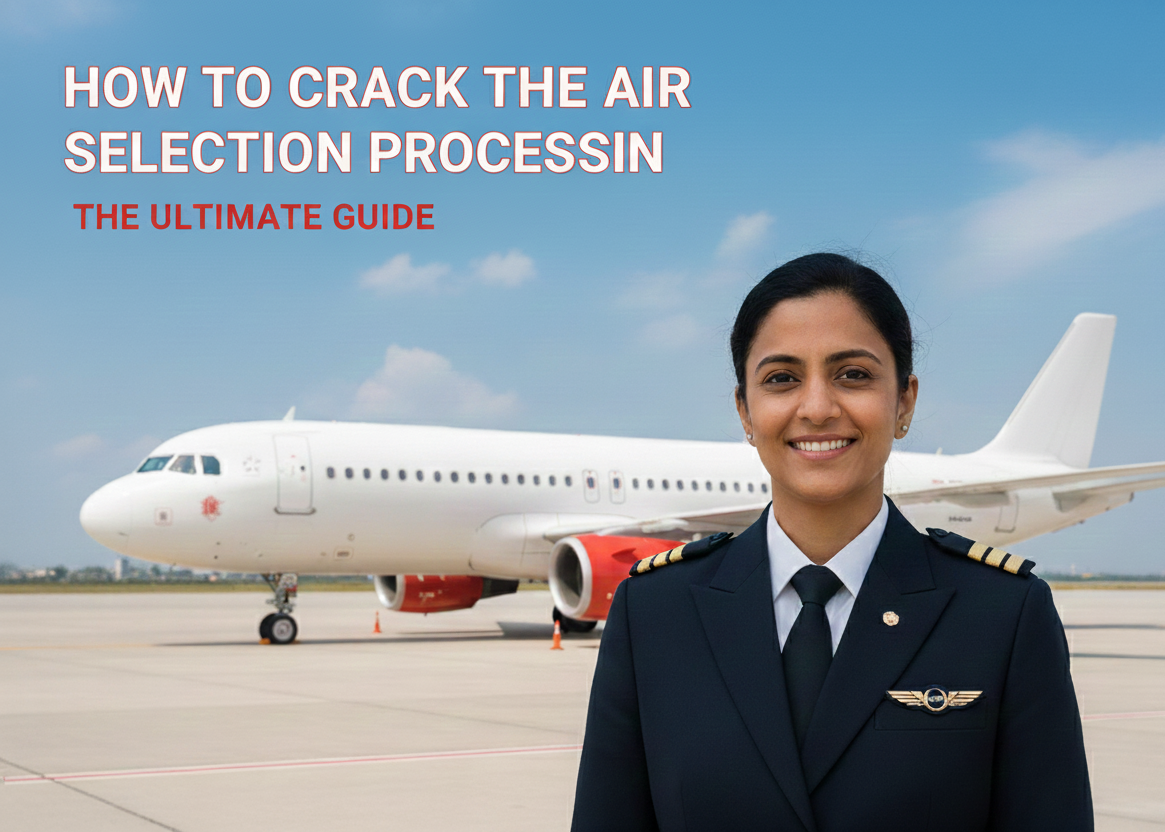
Indian aviation is entering a historic growth phase. With Air India’s fleet expansion and the integration of Vistara, pilot recruitment has evolved into a highly competitive, multi-stage selection system aligned with global Tier-1 airline standards.
In 2026, Air India is no longer hiring pilots based only on licenses or flight hours. The airline is looking for “Airline-Ready” professionals—pilots who combine strong technical knowledge, operational thinking, Crew Resource Management (CRM), and emotional intelligence.
This guide explains the latest Air India pilot selection process, common failure points, and a practical preparation strategy to help you maximize your chances of success.
Who This Guide Is For
- Fresh CPL holders preparing for airline induction
- Type-rated A320 pilots applying for Air India
- Candidates attending DGCA ground classes and planning airline interviews
- Pilots who want to avoid the six-month cooling-off period
Navigating the Air India Pilot Selection Process 2026
Based on recent recruitment cycles (subject to HR policy updates), the Air India selection funnel typically consists of five evaluation stages. Candidates must clear each stage sequentially.
Typical Selection Stages
1. Technical Written Test
- Duration: ~75 minutes
- Covers CPL subjects and Airbus A320 operational knowledge
- Emphasis on application-based and scenario-driven questions, not rote learning
Strong fundamentals from DGCA ground classes play a critical role here, especially in Air Regulations, Performance, and Technical General.
2. Psychometric Assessment
- Behavioral and personality profiling
- Conducted using globally recognized platforms such as AON / cut-e
- Evaluates decision-making, stress tolerance, teamwork, and consistency
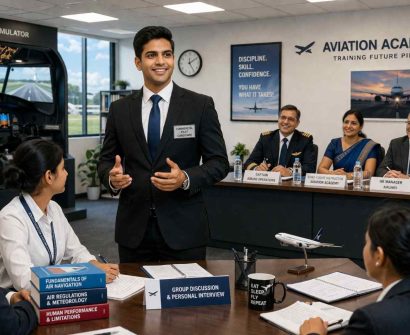
3. Group Discussion (GD)
- Tests CRM, communication, leadership, and empathy
- Candidates are assessed on how they contribute, not how much they speak
4. Personal Interview
- Conducted by HR and senior flight operations captains
- Focus on technical depth, attitude, SOP mindset, and airline culture fit
5. Simulator Proficiency Assessment Check (SPAC)
- 45–60 minute evaluation in a Full Flight Simulator (FFS)
- Focus on SOP discipline, manual flying skills, and trainability
The 2026 Selection Funnel: 5 Critical Gates
| Stage | Format | Focus Area |
| Technical Test | 75 Mins (approx. 60 MCQs) | Core CPL subjects + A320 Systems (Adaptive testing). |
| Psychometric | AON/Cut-E / Symbiotics | Cognitive ability, spatial orientation, and multitasking. |
| Group Discussion | 15–20 Mins (8–12 candidates) | Teamwork, facilitation, and CRM-based logic. |
| Personal Interview | Panel (HR + Ops Captains) | Technical depth, cultural fit (Tata values), and stability. |
| Simulator Check | 45–60 Mins in FFS | “Raw data” flying, SOP discipline, and trainability. |
Documentation: Your First Hidden Filter
Before entering the selection funnel, your paperwork must be flawless:
- Valid CPL / ATPL endorsed on eGCA
- Current Class 1 Medical
- Valid A320 type rating (if applicable)
- Updated logbook entries
Candidates early in their journey should ensure their training path—from DGCA ground classes to simulator preparation—aligns with airline expectations from day one.
What’s New in 2026? The Evolution of the Selection Funnel
The traditional approach of memorizing question banks is no longer effective. The 2026 process emphasizes conceptual understanding and operational judgment.
Key Changes:
- Adaptive written testing (difficulty adjusts based on performance)
- Greater weightage to CRM and interpersonal skills
- Increased scrutiny of simulator fundamentals
Air India aims to identify pilots who can learn quickly in a structured airline environment, not just those who can recall theoretical answers.
Beyond the Written Test: Why GD and CRM Matter
Group Discussions are now a primary elimination stage, not a formality.
Assessors closely observe:
- Facilitation Skills: Helping the group reach logical conclusions
- Situational Judgment: Demonstrating a safety-first mindset
- Active Listening: Acknowledging others before adding your input
Common GD topics include safety vs on-time performance, fatigue management, and decision-making under pressure.
The Technical Shift: From Theory to Line Operations
The technical assessment has shifted from pure DGCA theory toward real-world Airbus operations.
Key focus areas include:
- System Redundancy: Electrical, hydraulic, and flight control logic
- Flight Control Laws: Normal, Alternate, and Direct Law protections
- Performance Scenarios: Wet runways, flex temperatures, engine-out cases
Pilots increasingly use Airbus A320 online training to visualise system interactions and understand why ECAM actions occur—an approach that aligns closely with airline interview expectations.
Avoiding the Six-Month Cooling-Off Trap
One failed stage can lead to a cooling-off period of up to six months, as observed in recent recruitment cycles.
Common Reasons for Failure:
- Over-dependence on automation
- Weak raw-data manual flying skills
- Poor SOP discipline and callouts
- Gaps in CPL fundamentals due to weak ground preparation
What Air India Looks for in the SPAC
They do not expect commander-level performance.
They do expect:
- Structured cockpit discipline
- Correct response to briefings
- Clear learning curve after feedback
How to Prepare: A 2026 Strategy for Success
Cracking the Air India selection process requires a balanced, 360-degree preparation approach.
1. Strengthen Technical Foundations
- Revise CPL subjects thoroughly through structured DGCA ground classes
- Focus on Airbus philosophy and operational logic
- Understand ECAM actions instead of memorizing checklists
2. Use Airbus A320 Online Training Effectively
- Visualize system logic and failure cascades
- Understand protections and law reversion logic
- Link theory to simulator behavior
3. Prepare for Psychometric Consistency
- Be honest and consistent
- Demonstrate teamwork, accountability, and emotional stability
4. Practice Simulator Profiles
- Standard departures and V1 cuts
- Engine-out handling
- Non-precision approaches
- Clear verbalization and disciplined instrument scan
Webinar: Start Your Preparation the Right Way
If you are at the early or intermediate stage of your pilot journey, this webinar can help you build the correct foundation:
“DGCA: How to Become a Pilot & Prepare for Airline Selection”
Conclusion & Next Steps
Cracking the Air India pilot selection process in 2026 is challenging—but achievable with structured preparation and the right mindset.
Your Immediate Action Plan:
- Audit and validate documents
- Strengthen fundamentals through DGCA ground classes
- Begin Airbus A320 online training and SOP revision at least 30 days in advance
The process rewards pilots who invest in depth, discipline, and professionalism. Prepare smartly, and you significantly increase your chances of earning the Air India wings.
Frequently Asked Questions (FAQs)
What is the maximum age for the Air India Trainee Pilot role in 2026?
Typically around 30 years for general category candidates, subject to recruitment notifications.
Is an A320 type rating mandatory to apply?
For A320 fleet recruitment, a valid A320 endorsement on an Indian CPL/ATPL is generally required.
What is the cooling-off period after failure?
Approximately six months from the failed assessment date.
Does Air India accept 10+2 from NIOS?
Yes, provided minimum marks in Physics, Mathematics, and English are met.
Can I apply if my license is under renewal?
You may apply, but all licenses must be valid at the time of joining.