Currently Empty: ₹0.00
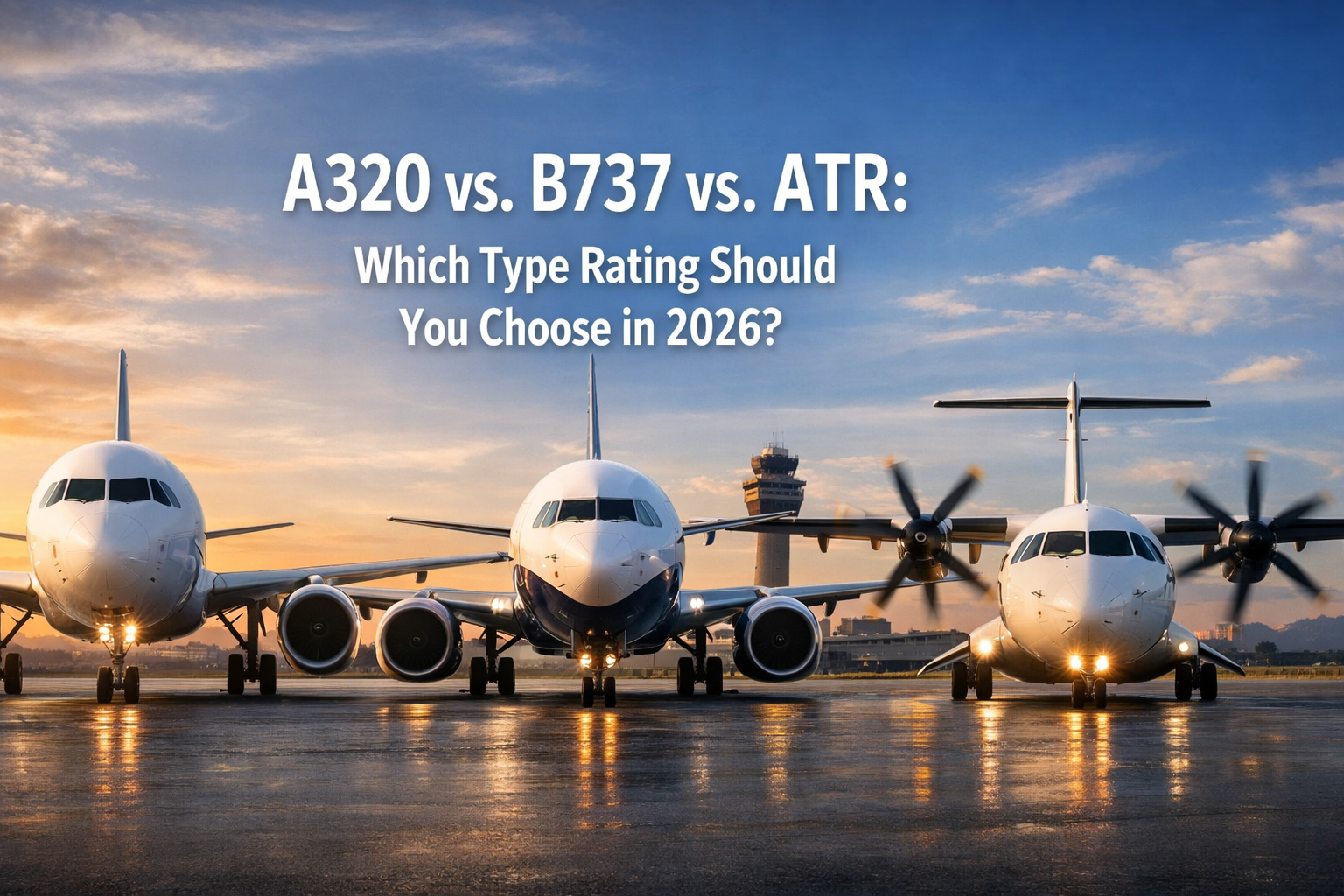
You’ve finished your CPL, cleared your papers, and now you’re standing at a financial crossroads. In 2026, a type rating is no longer just a “plus” on your resume; it is the essential bridge to an airline cockpit.
With the global pilot shortfall reaching nearly 24,000 this year, airlines are hiring aggressively. However, they aren’t just looking for pilots—they are looking for “operationally ready” candidates. Choosing between the high-tech Airbus A320 online training Airbus A320 online training, the classic Boeing 737, or the regional workhorse ATR 72 will define your lifestyle, salary, and career speed for the next decade.
Airbus A320: The “Volume” Choice for 2026
The Airbus A320 family is the undisputed king of the Indian and European skies. If your primary goal is to get hired as quickly as possible by a major Low-Cost Carrier (LCC), this is your best bet.
Why the A320 Dominates the Current Market
The backlog for the A320neo is massive. In 2026, airlines are taking deliveries of these jets almost weekly. For a fresher, this means a steady stream of “Direct Entry” hiring drives.
- Smart Technology: The A320 uses “Fly-by-Wire” technology with a side-stick. It acts like a smart assistant, protecting the flight envelope and reducing pilot workload.
- Commonality: Once you are A320 rated, transitioning to long-haul jets like the A350 is significantly faster due to the Cross Crew Qualification (CCQ) program.
Is the A320 Right for You?
Choose the Airbus if you prefer a highly automated cockpit and want to work for industry giants like IndiGo or Air India. It’s the “safe” bet for long-term domestic stability.
Boeing 737: The “Pilot’s Aircraft” Strategy
The Boeing 737 (NG and MAX) remains the backbone of the global aviation industry. While it has a smaller domestic footprint in some regions compared to Airbus, its international value is unmatched.
ATR 72: The Gateway to Regional Aviation
If you want to skip the long waitlists of the major jet hubs and get into a uniform immediately, the ATR 72-600 is your best bet. 2026 is the year of regional connectivity, fueled by government initiatives like UDAN and a growing middle class in Tier-2 and Tier-3 cities.
Boeing 737: The “Pilot’s Aircraft” Choice
While Airbus wins on sheer numbers in some regions, the Boeing 737—specifically the NG and the MAX—remains the backbone of global aviation. From the massive fleets of Ryanair in Europe to Southwest in the US, the 737 is a global currency for pilots.
The Global Appeal of the 737 NG/MAX
In 2026, the 737 MAX has fully matured as a platform. In India, carriers like Akasa Air and Air India Express are aggressively expanding their 737 fleets to challenge the Airbus dominance. If your goal is to work for a Middle Eastern giant like FlyDubai or eventually move to the North American market, the 737 rating is your strongest asset.
Handling and Manual Control
Boeing pilots often take pride in the “hands-on” nature of their aircraft. Unlike the side stick of the Airbus, the 737 uses a traditional stick.
- Tactile Feedback: There is a direct, mechanical feel to the aircraft. You feel the tension in the cables; you feel the aircraft’s response in your palms.
- Active Controls: On a Boeing, the throttles move automatically when the autothrust is engaged—on an Airbus, they don’t move. This visual and physical feedback is why many “purist” pilots prefer the Boeing cockpit.
Secondary Market Strength: Cargo and Charters
The 737 has a massive presence in the cargo sector. As e-commerce delivery demands continue to skyrocket in 2026, 737 freighter conversions are at an all-time high. A 737 rating doesn’t just limit you to passenger airlines; it opens doors to cargo giants and private charter operations that value the 737’s ability to operate out of diverse airfields.
The Regional Boom: Fast-Track to the Cockpit
Regional aviation is the fastest-growing sector this year. Airlines like Flybig, Fly91, and SpiceJet’s regional arm are hungry for pilots. Because many freshers chase the “glamour” of the big jets, the competition for ATR positions is often lower.
- Connectivity: You’ll be flying into shorter runways and more challenging terrain, which builds incredible pilot skills.
- Home Base: Regional pilots often enjoy better stability in their home bases compared to the constant shifting of narrow-body schedules.
Pros and Cons of Turboprop Training
Cons: The initial pay for a turboprop First Officer is generally lower than that of a jet pilot. Additionally, the ATR flies at lower altitudes and slower speeds, which means more “active” flying in weather.
Pros: The primary advantage is cost and time. An ATR rating in 2026 is roughly 15-20% cheaper than a jet rating. Furthermore, the path to “Command” (becoming a Captain) is significantly faster—often 3 to 4 years compared to the 6 to 8 years typical in the A320/B737 world.
Tactile Flying and Global Mobility
Unlike the side-stick of an Airbus, the Boeing 737 uses a traditional yoke. It is a “hands-on” airplane that requires sharp manual flying skills.
- The “Feel” of Flight: Many pilots prefer the 737 because it provides direct feedback through the controls. You aren’t just managing a computer; you are flying a machine.
- Cargo and International Reach: The 737 dominates the booming air cargo sector. If you aspire to fly, or international giants this rating is your golden ticket.
The 2026 Advantage
With the 737 MAX fleets finally expanding at scale, the demand for 737-rated pilots in 2026 has spiked. It’s a great choice if you want to keep your options open for both passenger and cargo roles globally.
ATR 72: The Fast-Track to the Captain’s Seat
Regional aviation is the “hidden gem” of 2026. While everyone is fighting for a seat in a narrow-body jet, the regional sector is starving for talent.
Regional Boom and Faster Command
Thanks to regional connectivity schemes (like UDAN in India), tier-2 and tier-3 cities are now major hubs. This has made the ATR 72-600 a critical asset.
- Lower Competition: There are fewer applicants for ATR roles compared to the A320, Airbus A320 type rating course , making it easier for freshers to break in.
- Rapid Career Growth: You can often become a Captain on an ATR in just 3–5 years, whereas the same jump on a jet could take 7–9 years.
Decision Matrix: How to Choose
Still undecided? Use this quick checklist to see where you align:
- Choose the A320 if: You want the highest number of job vacancies in India, you prefer a high-tech automated environment, and you have your sights set on flying the A350 one day.
- Choose the B737 if: You enjoy the physical “feel” of flying, you are interested in the cargo industry, or you plan to move to the Middle East or the USA later in your career.
- Choose the ATR if: You want to save on initial training costs, you want to reach the Captain’s seat in record time, and you enjoy the challenge of regional operations.
A Different Kind of Flying
Flying an ATR is “honest” flying. You deal with more manual takeoffs, varied weather at lower altitudes, and shorter runways. It builds incredible foundational skills that make you a superior pilot in the long run at the aviation training academy.
2026 Comparative Analysis: Cost & ROI
| Factor | Airbus A320 | Boeing 737 | ATR 72-600 |
| Estimated Cost (2026) | ₹16L – ₹25L | ₹15L – ₹23L | ₹12L – ₹16L |
| Hiring Volume | Very High | High (Cargo/LCC) | High (Regional) |
| Control Type | Side-stick (Automation) | Yoke (Tactile) | Yoke (Turboprop) |
| Path to Captain | 7–9 Years | 6–8 Years | 3–5 Years |
| Best For | Domestic Stability | Global Mobility | Fast Command |
Conclusion: Your Next Steps
Choosing a type rating in 2026 is about matching your personality to the machine.
- Go A320 if you want the most job options today.
- Go B737 if you want a global, hands-on career.
- Go ATR if you want to be a Captain by your late 20s.
Frequently Asked Questions (FAQ)
Q: Which type rating has the highest salary in 2026?
A: Initially, A320 and B737 First Officers earn higher base salaries (approx. ₹3L–₹5L per month). However, because you become a Captain much faster on an ATR, your lifetime earnings can often equalize or even exceed jet pilots in the first 10 years.
Q: Can I switch from A320 to B737 later?
A: Yes. This is called “Differential Training.” It usually takes about 2–3 weeks in a simulator. However, you will have to pay for this transition unless your airline is changing its fleet.
Q: Is it better to wait for an airline to pay for my rating?
A: In 2026, most airlines prefer “Ready-to-Fly” candidates. While cadet programs exist, self-sponsoring your rating can save you 12–18 months of waiting time, allowing you to start earning and logging hours immediately.
Q: Does a type rating guarantee a job?
A: No rating guarantees a job, but in the current 2026 pilot shortage, it makes you eligible for “Direct Entry” slots which are currently the fastest way into an airline.