Currently Empty: ₹0.00

You’ve cleared your DGCA Ground Classes, aced your flight tests, and logged hundreds of hours in the sky. Yet, as you sit in the waiting area for your airline interview, your heart is racing faster than a jet engine at takeoff. This is the “Psychological Barrier.”
In 2026, airlines like IndiGo, Air India, and Qatar Airways aren’t just looking for someone who can fly a plane—they are looking for someone who can lead a crew under pressure. Technical skills get you the interview; psychology gets you the job. This guide explores the “hidden” side of the pilot interview: how to master your mind, project command presence, and prove you are the “safe pair of hands” every airline wants.
The Science of Nervousness: Why Pilots Feel the Pressure
Nervousness is a physiological response, not a sign of weakness. When you enter a high-stakes interview, your brain triggers the “Amygdala Hijack”—a survival mechanism that releases cortisol and adrenaline. Even well-prepared candidates who know common pilot interview questions and answers can struggle if anxiety takes over.
Understanding Physiological Arousal
The first step to control is acknowledging that nervousness is just “energy” without direction. The Yerkes-Dodson Law explains that optimal stress improves performance—but too much reduces clarity.
- Practical Example: If your hands are shaking, don’t hide them. Rest them calmly on your thighs. This simple grounding technique is one of the most underrated pilot interview tips for controlling visible anxiety.
The “Anxiety to Excitement” Pivot
Research shows that telling yourself “I am calm” rarely works because your body knows it’s a lie. Instead, tell yourself, “I am excited.” Physically, nervousness and excitement feel the same—racing heart, butterflies, sweaty palms. By labelling the feeling as excitement, you move from a “Threat” mindset to an “Opportunity” mindset.
Box Breathing: The Pilot’s Secret Weapon
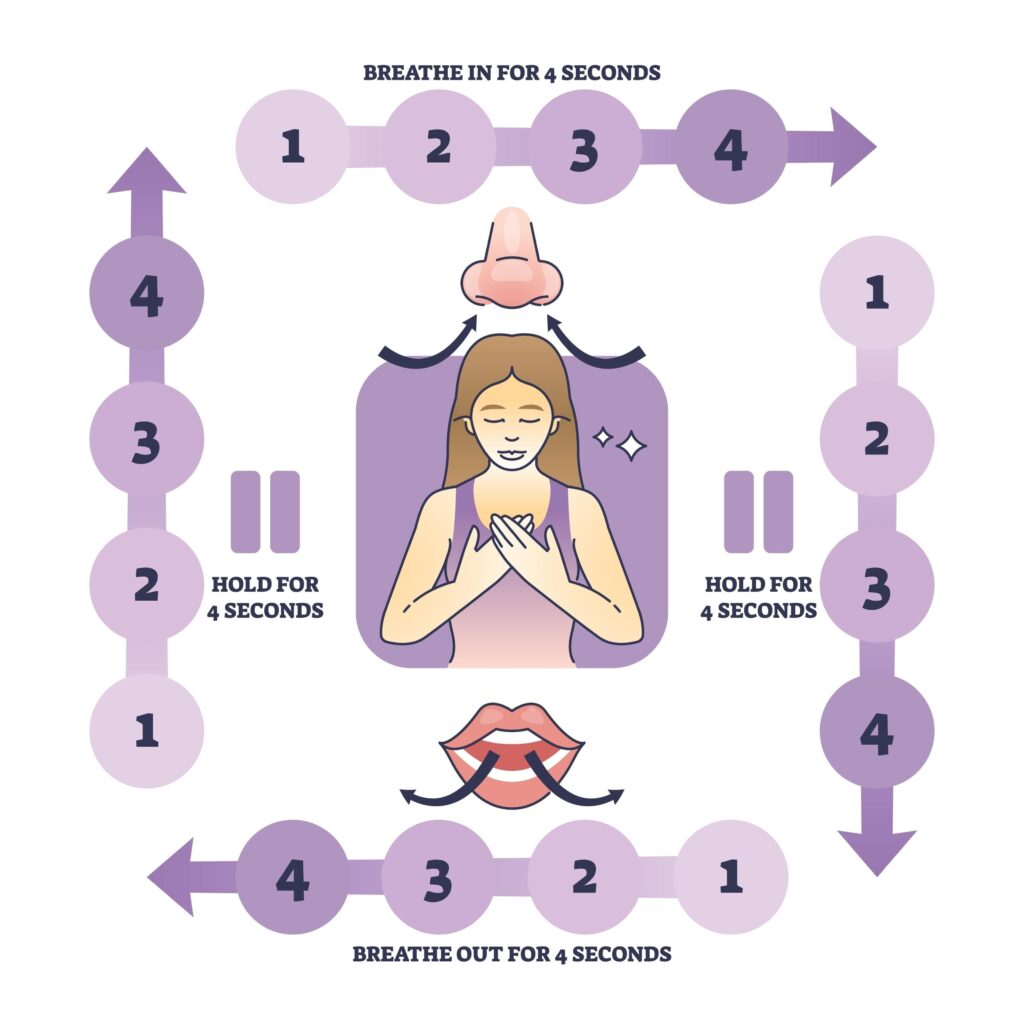
Used by Navy SEALs and elite aviators, Box Breathing resets the autonomic nervous system.
- Inhale for 4 seconds.
- Hold for 4 seconds.
- Exhale for 4 seconds.
- Hold for 4 seconds. Do this three times before entering the room. It lowers your heart rate and clears the “mental fog” caused by adrenaline.
Building Command Presence: Beyond the Uniform
Airlines look for “Command Presence”—the intangible quality that makes people trust a Captain the moment they walk onto the aircraft. It’s not about being arrogant; it’s about being composed, decisive, and empathetic.
The Big Five Personality Traits in Aviation
As seen in many Psychometric Test Prep reports from institutes like Airship Aviation Academy, airlines evaluate you on the “Big Five” traits. To build presence, you must project:
- Low Neuroticism: Showing you are unflappable. Even if you don’t know an answer, a calm “I am not 100% sure, but I would refer to the FCOM to verify” is better than a panicked guess.
- High Conscientiousness: Showing you are disciplined and detail-oriented.
- Agreeableness: Demonstrating you are a team player who values Crew Resource Management (CRM).
The 7-38-55 Rule of Communication
Psychology tells us that only 7% of your impact comes from your words. 38% comes from your tone, and 55% comes from your body language.
- Eye Contact: Hold eye contact with the person asking the question, but briefly scan the other panellists. It shows you are inclusive.
- The “Pilot Lean”: Sit slightly forward. It signals engagement and active listening.
- Voice Control: Speak from your diaphragm. Lower-pitched voices are psychologically associated with authority and stability.
Step-by-Step Process: Mastering the Psychological Interview
Clearing a pilot interview is a structured manoeuvre. You wouldn’t fly a plane without a checklist; don’t enter an interview without a psychological one.
Step 1: Mental Rehearsal (Visualisation)
Spend 10 minutes a day visualising the walk into the room, the handshake, and the feeling of answering a difficult question with confidence. Professional athletes use this to “pre-wire” their brains for success.
Step 2: The STAR Method for Behavioural Questions
When asked, “Tell us about a time you had a conflict in the cockpit,” use the STAR method to keep your story logical and calm:
- Situation: Set the scene briefly.
- Task: What needed to be done?
- Action: What did you do? (Focus on CRM and communication).
- Result: What was the positive outcome?
Step 3: Handling the “Stress Test” Question
Recruiters might interrupt you or challenge your technical knowledge to see if you “snap.”
- The Psychological Fix: Pause for two seconds before answering. This shows the panel that you are thinking, not just reacting. It’s the interview equivalent of “Aviate, Navigate, Communicate.”
Step 4: The Post-Interview Debrief
Regardless of the outcome, write down the questions that made you nervous. This “desensitises” those topics for your next session, reducing future anxiety.
Comparison: Technical Prep vs. Psychological Prep
| Feature | Technical Interview Focus | Psychological / HR Interview Focus |
| Primary Goal | Knowledge of Aerodynamics/Systems | Assessment of Character & CRM |
| Success Metric | Correctness of the answer | Manner in which the answer is given |
| Key Resource | DGCA Ground Classes / FCOM | Psychometric Results / Mock Interviews |
| Body Language | Attentive | Command Presence & Empathy |
| Critical Factor | Technical Accuracy | Emotional Intelligence (EQ) |
Aspirants Point: Becoming the “Safe Pair of Hands”
For every aspirant reading this, remember: the airline isn’t looking for a perfect human; they are looking for a reliable pilot. They want to know that if an engine fails at V1, you won’t freeze. If you can control your nerves in a small room with three people, they trust you can control a plane with 180 passengers.
The transition from a student at an aviation training academy to an airline pilot requires a shift in identity. Stop viewing yourself as a “candidate” and start viewing yourself as a “Captain in training.” This shift in self-perception naturally builds the command presence you need to succeed.
Conclusion & Next Steps
Mastering pilot interview psychology is about closing the gap between your technical ability and your outward presence. By understanding the science of nervousness and practising command presence, you transform from a nervous applicant into a professional aviator.
Your Next Steps:
- Analyse Your Personality: Review your ADAPT aviation test Psychometric Test results to identify your “Big Five” strengths.
- Practice Visualisation: Spend 5 minutes every morning visualising a successful interview.
- Mock Interviews: Join a prep course at a reputable aviation training academy to get professional feedback on your body language and tone.
- Master the STAR Method: Prepare five “stories” from your flight training that demonstrate leadership and teamwork.
The interview is just another “flight.” Prepare your checklist, trust your training, and maintain your composure.
FAQ
Q: How do I stop my voice from trembling during a pilot interview?
A: This is usually due to shallow breathing. Take deep breaths into your belly (not chest) before speaking. Also, slightly increase your volume; speaking a bit louder forces you to use more air and stabilises the vocal cords.
Q: What is the best way to answer “What is your greatest weakness?
A: Use a genuine aviation-related weakness and show how you’ve “mitigated” it. For example: “Early in my training, I struggled with multitasking during high-workload phases, so I developed a personal checklist system to manage my cockpit duties more effectively.
Q: How do airlines use psychometric tests?
A: Airlines use them to see if your personality fits the pilot profile (high stability, low impulsivity). Many students use the Adapt Psychometric Test to understand their “Big Five” scores and learn how to highlight their strengths.
Q: Is it okay to say “I don’t know” in a technical round?
A: Yes, but say it professionally. “I don’t have the exact figure for the A320’s max tyre speed right now, but I know exactly where to find it in the Limitations section of the FCOM.” This shows you know your resources.
Q: How to control nervousness in a pilot interview?
A: Control nervousness in a pilot interview by using deep breathing techniques like box breathing, practising mock interviews, and reframing anxiety as excitement. Staying physically grounded and pausing before answering also improves composure.
Q: How to pass a pilot interview successfully?
A: To pass a pilot interview, combine strong technical knowledge with confidence, clear communication, and good body language. Use structured answers like the STAR method and demonstrate calm decision-making under pressure.
Q: What are the most common pilot interview questions and answers?
A: Common pilot interview questions include technical topics (aircraft systems, meteorology) and HR questions (teamwork, decision-making). Strong answers are clear, structured, and show good judgment, CRM skills, and professionalism.
Q: What is command presence in a pilot interview?
A: Command presence is the ability to appear calm, confident, and in control. It includes body language, tone of voice, and decision-making style that builds trust and authority.
Q: How can I improve my confidence for an airline interview?
A: Improve confidence by practising mock interviews, preparing answers in advance, using visualisation techniques, and mastering breathing control. Consistent practice reduces anxiety and improves performance.
Q: Is it okay to say “I don’t know” in a pilot interview?
A: Yes, it is acceptable if said professionally. A good response shows honesty and resource awareness, such as referring to the FCOM or standard procedures to find the correct answer.