Currently Empty: ₹0.00
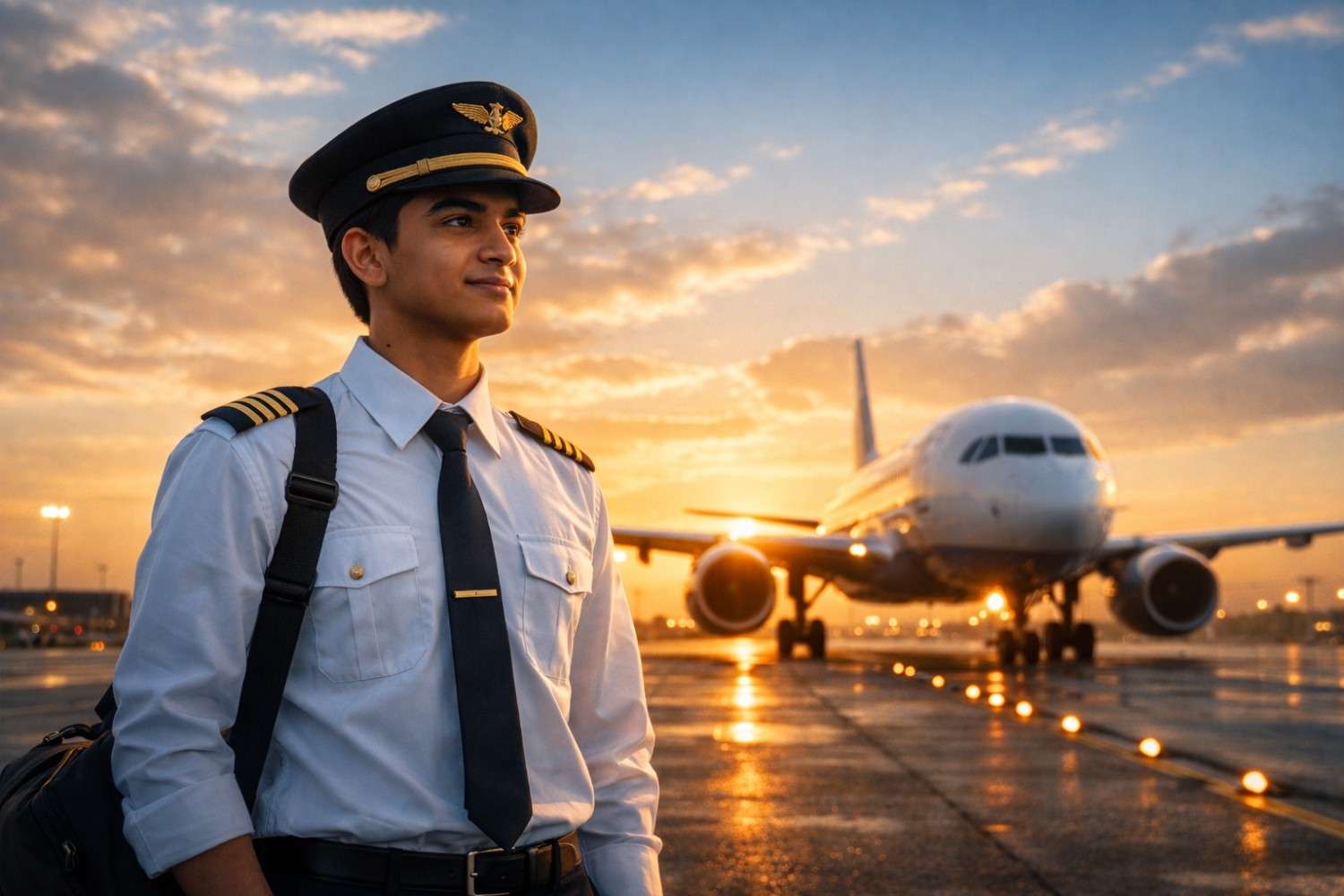
The sky is no longer the limit; it is the workplace. For students finishing their higher secondary education, a career in aviation after 12th offers a blend of glamour, high technology, and unmatched financial rewards. As we move through 2026, the Indian aviation sector is witnessing a “Golden Age,” with domestic airlines placing some of the largest aircraft orders in history.
Whether you want to command a 200-ton jet, ensure passenger safety as cabin crew, or manage complex airport operations, the opportunities are vast. This guide breaks down the best aviation training academy courses after 12th, the fees involved, and the step-by-step path to landing your dream job.
Why Choose a Career in the Aviation Industry After 12th?
Before diving into the “how,” it is important to understand the future scope of the aviation industry in India. Experts predict that India will become the world’s third-largest aviation market by the end of the decade. This growth translates directly into thousands of airline jobs after the 12th.
Benefits of an Aviation Career:
- High Salary Potential: Pilots and senior management often earn salaries that are in the top 1% of the country.
- Global Exposure: You aren’t confined to an office cubicle. You travel the world, experience different cultures, and meet diverse people.
- Rapid Career Growth: Due to the shortage of skilled professionals, the promotion cycle in aviation is often faster than in traditional corporate sectors.
- Prestige: Aviation professionals are respected globally for their discipline, technical skills, and commitment to safety.
Top Aviation Career Options After 12th
There is a common misconception that aviation is only about pilots and air hostesses. In reality, the industry is a massive ecosystem. Here are the best aviation courses after 12th science/commerce/arts:
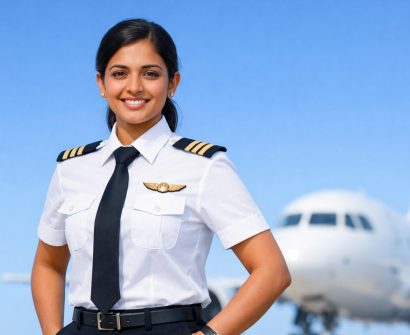
1. Commercial Pilot (The Most Coveted Path)
A pilot course after 12th is the most direct way to a high-paying career. You start by earning a Commercial Pilot License (CPL). While Science (PCM) is traditionally required, students from other streams can bridge this gap via NIOS.
- Key Requirement: 200 flight hours requirement and passing DGCA exams.
2. Cabin Crew & Air Hostess
An air hostess course after 12th or a cabin crew career after 12th is ideal for those with excellent communication skills and a service-oriented mindset.
- Key Requirement: Pleasing personality, fluency in English/Hindi, and specific height/weight standards.
3. Ground Staff & Airport Management
If you prefer being on the ground, ground staff roles involve everything from check-in and baggage handling to security and ramp management.
- Courses: BBA in Aviation or Diploma in Airport Management.
4. Aircraft Maintenance Engineering (AME)
These are the wizards who ensure the planes are safe to fly. An aircraft training course in AME is highly technical and essential for airline operations.
Comparison Table: Pilot vs. Cabin Crew vs. Ground Staff
| Feature | Commercial Pilot | Cabin Crew | Ground Staff / Management |
| Minimum Education | 12th (PCM preferred) | 12th (Any stream) | 12th (Any stream) |
| Duration of Training | 18 – 24 Months | 6 – 12 Months | 6 Months – 3 Years |
| Initial Cost | ₹60L – ₹1.2 Cr | ₹50k – ₹2L | ₹50k – ₹4L |
| Starting Salary | ₹1.5L – ₹3L /month | ₹50k – ₹90k /month | ₹25k – ₹50k /month |
| Physical Standards | Strict Medicals | Height/Weight/Skin | General Fitness |
Why Choose a Career as a Pilot?
Before we dive into the technicalities, let’s talk about why a pilot career in India is one of the most coveted paths today.
- Financial Rewards: Pilots are among the highest-paid professionals globally. The pilot salary in India for freshers starts where many corporate careers peak.
- Global Lifestyle: Your “office” changes every day. From the peaks of the Himalayas to the skyscrapers of Dubai, the world is literally your backyard.
- Rapid Growth: The aviation industry is expanding beyond just passenger travel. Air transport jobs in cargo, private charters, and medical evacuations are booming.
- Technological Marvels: You get to operate the pinnacle of human engineering, such as the Airbus A320 or Boeing 787.
Eligibility to Become a Pilot After 12th
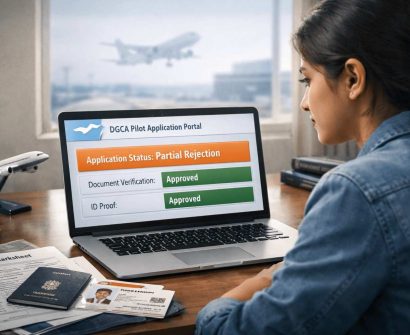
To become a pilot after 12th, you must meet specific academic and physical criteria set by the Directorate General of Civil Aviation (DGCA).
Educational Requirements
The standard requirement is 10+2 with Physics and Mathematics (PCM).
- Commerce/Arts Students: You can still pursue this! You simply need to clear Physics and Math exams separately via the National Institute of Open Schooling (NIOS).
- Minimum Marks: Most aviation training academy programs require at least 50% aggregate in PCM.
Age and Medical Fitness
- Age: You must be at least 17 years old to start training and 18 to hold a license.
- DGCA Class 1 Medical: This is the most critical hurdle. It involves a full-body check-up, including eyesight (6/6 correctable), hearing, and cardiac health. You should obtain your Class 2 Medical first before moving to Class 1.
Types of Pilot Licenses
In your aviation education journey, you will progress through three main licenses:
- Student Pilot License (SPL): Think of this as a learner’s permit. It allows you to fly under the supervision of an instructor.
- Private Pilot License (PPL): This allows you to fly private aircraft and carry passengers (friends/family), but you cannot fly for compensation.
- Commercial Pilot License (CPL): The “Gold Standard.” This allows you to fly for airlines and get paid. This is the core of pilot training after 12th.
Step-by-Step Process: How to Join Aviation After 12th
The path varies depending on the role, but the general roadmap to start a career in the aviation industry after 12th looks like this:
Step 1: Choose Your Stream
- For Pilots/Engineers: Prioritise Science (PCM).
- For Cabin Crew/Management: Any stream (Arts, Commerce, or Science) works perfectly.
Step 2: Clear Medical Exams
Aviation is health-dependent. For pilots, a DGCA Class 1 Medical is mandatory. For cabin crew, basic fitness and vision standards apply.
Step 3: Enroll in a Reputed Academy
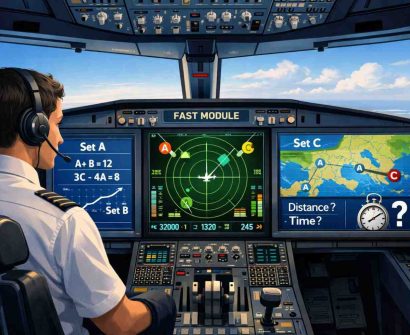
Join an aviation training academy that is DGCA-approved. For pilots, this means starting DGCA ground classes to clear your theory papers before you hit the cockpit.
Step 4: Practical Training
- Pilots: Log your flight hours at a Flying Training Organisation (FTO).
- Cabin Crew: Undergo grooming, safety, and etiquette training.
Step 5: Specialisation (The Final Touch)
For pilots, the final step is often an Airbus A320 type rating course. This is where you learn to fly the specific large jets used by airlines like IndiGo or Air India.
Skills Required for Aviation Jobs
It isn’t just about degrees; it is about “Soft Skills.” Airlines look for:
- Crisis Management: Can you stay calm if an engine fails or a passenger has a medical emergency?
- Communication: Fluent English is the international language of aviation.
- Discipline: Aviation runs on a strict 24/7 clock. Punctuality is non-negotiable.
- Teamwork: The pilot, crew, and ground staff must work like a well-oiled machine.
Salary in the Aviation Industry After 12th (Monthly Estimates)
| Role | Fresher Salary | Experienced (5+ Years) |
| Junior First Officer | ₹1,50,000 – ₹2,50,000 | ₹5,00,000+ |
| Senior Cabin Crew | ₹45,000 – ₹80,000 | ₹1,20,000+ |
| Airport Manager | ₹30,000 – ₹60,000 | ₹1,50,000+ |
| AME (Engineer) | ₹40,000 – ₹75,000 | ₹2,00,000+ |
Conclusion & Next Steps
A career in the aviation industry after 12th is more than just a job; it is a ticket to a life of adventure. While the pilot training cost in India can be high, the Return on Investment (ROI) is among the fastest across all sectors.
Your Next Steps:
- Self-Assessment: Do you prefer technical flying or people-oriented service?
- Medical Check: If you want to be a pilot, book a Class 2 Medical today.
- Research Academies: Visit at least three institutes to compare their placements and infrastructure.
- Start Ground School: If flying is your dream, start your DGCA ground classes to get a head start.
FAQ:
Q: Can I join aviation after 12th?
A: Yes, you can join immediately after the 12th. You can enroll in pilot training, cabin crew courses, or diploma programs in airport management.
Q: Which aviation course is best after 12th?
A: If you have a PCM background and a high budget, CPL (Pilot) is the best. If you want a quick entry into the industry from any stream, a Cabin Crew or Diploma in Aviation is ideal.
Q: Is aviation a good career option in India?
A: Yes, India is currently the fastest-growing aviation market in the world. With new airports and thousands of planes being added, job security is very high.
Q: How much does an aviation course cost after 12th?
A: It ranges from ₹50,000 for a short diploma to ₹1 Crore for an integrated Cadet Pilot Program.
Q: Can I be a pilot after 12th commerce?
A: Yes! You need to clear Physics and Math as separate subjects via NIOS (National Institute of Open Schooling).
Q: Can I become a pilot after 12th commerce?
A: Yes! You just need to clear Physics and Math via NIOS (National Institute of Open Schooling) to satisfy the DGCA pilot eligibility criteria.
Q: How many years does it take to become a pilot in India?
A: Usually 18 to 24 months to get your CPL, plus another 3–6 months for your Type Rating and airline induction.
Q: Is a pilot a good career option in India?
A: Absolutely. With high demand and excellent pay scales, it is one of the top aviation career options for students today.