Currently Empty: ₹0.00
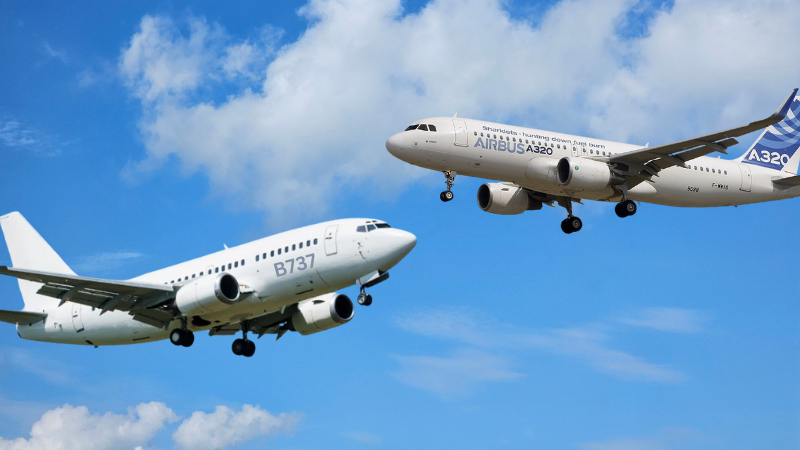
For Indian commercial pilots, choosing between an A320 vs. B737 type rating is not just about aircraft preference. It is a strategic career decision that influences airline eligibility, interview timelines, training investment, and long-term employability. With narrow-body aircraft dominating Indian aviation, this choice can directly affect how quickly a pilot moves from training into an airline cockpit.
Both the Airbus A320 & the Boeing 737 are proven, reliable, and widely operated. However, they differ in fleet distribution, airline hiring behaviour, training approach, and global career scope. In this blog, we will tell you about the factors to choose the best type rating course for your airline career. Let’s discuss this in detail!
What Are the Factors to Choose the Best Type Rating Course
India’s aviation growth is heavily centred on short- and medium-haul routes. Airlines prefer narrow-body aircraft for operational efficiency, high seat density, and fast turnaround times. As a result, pilots with narrow-body type ratings dominate airline hiring pipelines.
One important reality pilots should understand is that a type rating alone doesn’t guarantee a job. The aircraft type must match airline demand at the right time. Choosing between A320 and B737 type ratings without understanding the airline’s strategy can lead to long wait times, even after completing a type rating course.
Airline Fleet Demand & Hiring Probability
Airbus A320 Fleet Dominance
The Airbus A320 family has become the backbone of Indian domestic aviation. Airlines such as IndiGo, Air India (narrow-body division), Vistara, and Akasa Air operate large, continuously expanding A320 fleets. IndiGo’s aggressive aircraft induction creates frequent pilot demand, making the A320 type rating highly relevant for Indian pilots.
Airlines often conduct mass recruitment drives aligned with fleet deliveries, which increases the likelihood of interviews for A320-rated pilots. This fleet concentration means that A320-type rating courses align closely with immediate domestic employment opportunities.
Boeing 737 Fleet Position in India
The Boeing 737 has a smaller but focused presence in India. Air India Express and Akasa Air operate 737 aircraft, primarily on short-haul regional and international routes. While hiring volumes are lower than those of A320 operators, competition can also be slightly reduced.
The B737 type rating becomes more valuable when airline expansion plans align with new aircraft deliveries. In India, Boeing 737 hiring is more cyclical and depends heavily on airline-specific growth phases.
A320 Vs. B737 Type Rating Approach & Learning Compatibility
The aircraft training philosophy should match the pilot’s learning style.
Airbus A320: Automation-Centric Training
The Airbus A320 uses a fly-by-wire design with strong automation. The aircraft protects flight envelopes and reduces pilot workload during critical phases. During an A320 type rating course, training emphasises:
- System monitoring
- Automation management
- Procedural discipline
- Standard callouts and flows
Boeing 737: Manual Control and Pilot Authority
The Boeing 737 reflects Boeing’s pilot authority and direct aircraft control. While automation is available, pilots are expected to manage trim, thrust, and flight path actively. A B737 type rating course places stronger emphasis on:
- Manual flying skills
- Energy management
- Situational awareness
- Direct system control
Adaptation Ease for Fresh CPL Pilots
Most Indian CPL holders train on light aircraft with limited automation. The Airbus A320 type rating course is more forgiving during the early stages of airline transition because automation reduces workload during high-pressure phases, allowing pilots to focus on SOP discipline.
The B737 demands faster manual decision-making and active system control, which can feel intense initially for some pilots. Since most Indian airlines provide strong SOP-driven conversion modules, A320-rated pilots generally report smoother first-phase adaptation.
A320 Vs. B737 Type Rating Course Cost and Financial Planning
A type rating is a major financial investment, often self-sponsored. A320 type rating cost is generally higher due to simulator demand and airline-specific training requirements. The cost of a B737 type rating can be slightly lower, especially if training slots are available overseas. However, pilots must measure ROI using time-to-employment, not just upfront cost.
A higher investment that shortens interview wait time and airline entry delivers stronger long-term financial stability. In India, because A320 hiring is more frequent, pilots often recover their investment faster than on B737, unless training is aligned with a specific airline’s 737 intake phase.
Airline Job Access After Type Rating Course Completion
The A320 job market in India is broader and more consistent. Airlines often shortlist pilots based on fleet requirements rather than aircraft preference. Holding an A320 type rating increases eligibility across multiple airlines, improving interview frequency and selection chances.
The B737 job market is narrower but focused. Pilots who align their training with specific airline intake windows often benefit the most. For pilots open to international contracts, the B737 type rating may provide broader global reach beyond India.
A320 Vs. B737 Type Rating: Career Progression & Command Upgrade Path
Command upgrade timelines depend on airline growth, pilot attrition, and internal policies. Large A320 operators may have slower command upgrades due to high pilot numbers. On the other hand, smaller B737 fleets may offer faster upgrades if expansion continues steadily. However, career stability and command upgrades are available on both aircraft when aligned with the correct airline ecosystem.
A320 Vs. B737 Type Rating: Global Career Scope and Mobility
Globally, both aircraft types are highly respected. The B737 type rating has strong demand in the Middle East, Europe, and charter operations. A320 type rating dominates low-cost carriers across Asia and expanding African markets. Indian pilots planning international careers should consider global fleet trends, not just domestic hiring.
Simulator Availability and Training Infrastructure
Simulator scheduling can make or break training timelines. India has significantly more A320 simulators, reducing delays in training slot allocation. For B737, pilots often train abroad due to fewer domestic simulators.
This can increase expenses but also provide exposure to international regulatory and airline-grade environments. Still, pilots who prioritise faster simulator access for their type rating course benefit more from the A320 infrastructure in India.
Conclusion
For most Indian pilots, the A320 type rating tends to be the more practical choice. It has a larger fleet presence in India, leading to more frequent hiring. Its automated systems also ease the transition from training. At Airship Aviation Academy, our pre-type rating course prepares you for this transition.
Our foundational module introduces you to the A320 and B737 systems, cockpit layouts, and standard procedures. It is designed for pilots transitioning from basic training to advanced aircraft and requires no prior type rating or experience. Contact us today!