Currently Empty: ₹0.00
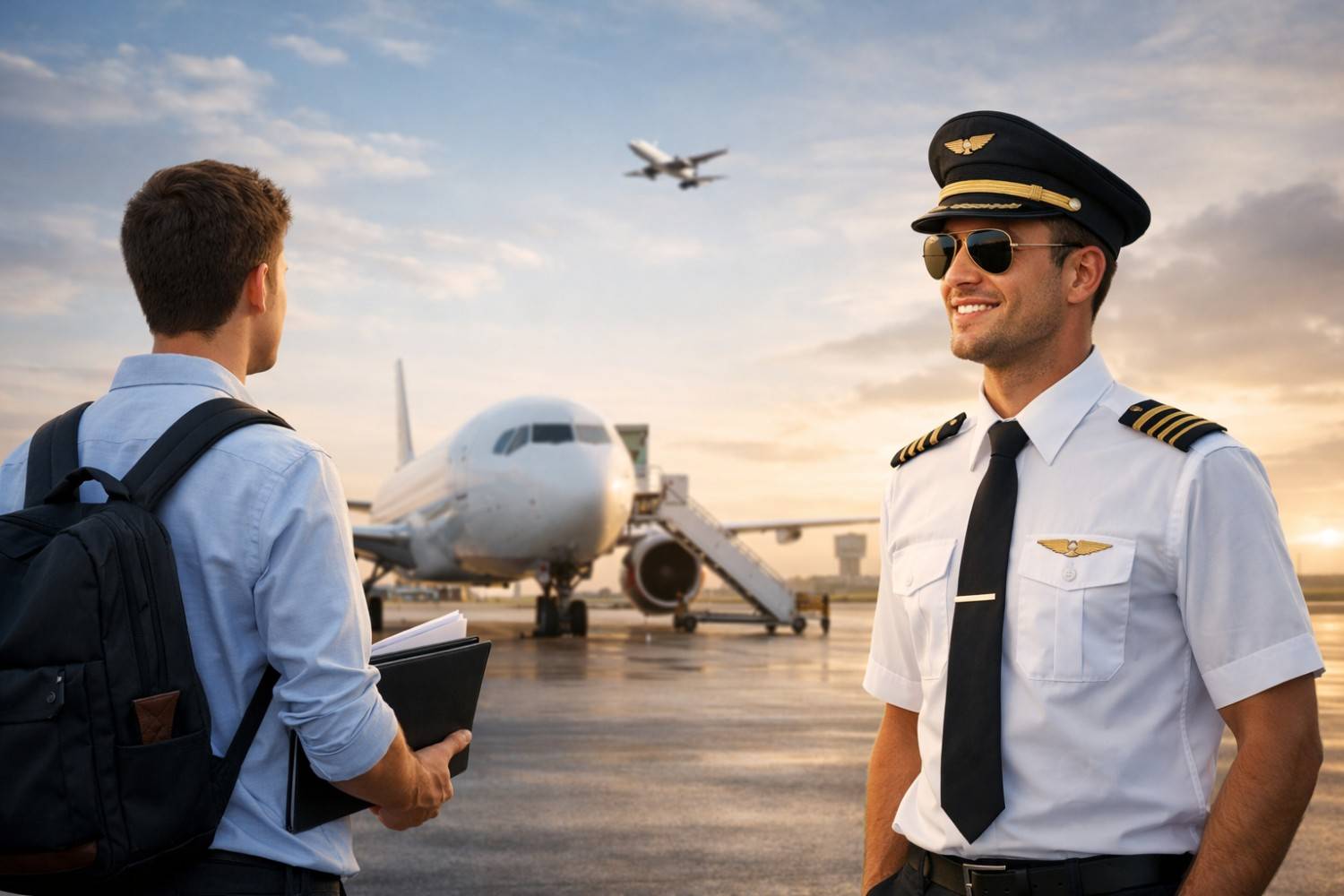
Yes, a commerce student can become a pilot. One of the most persistent myths in the Indian education system is that the cockpit is reserved exclusively for Science stream students. If you chose Commerce in high school but find yourself staring at passing planes more than balance sheets, you might feel like you’ve missed your chance.
Here is the truth for 2026: a commerce student can become a pilot. In fact, some of the most successful airline captains, including those at IndiGo and Air India, started in accountancy and economics. The Directorate General of Civil Aviation (DGCA) has created a clear “bridge” pathway to ensure that your 12th-grade stream doesn’t ground your dreams forever.
The Academic Bridge: Physics and Maths Requirement for Pilot
The primary hurdle for any commerce student is the physics and maths requirements for pilot eligibility. According to the DGCA pilot eligibility criteria, every commercial pilot must have passed Physics and Mathematics at the 10+2 level.
If you didn’t have these subjects in your Commerce stream, don’t panic. You don’t need to go back to school for two years.
The NIOS Solution
The National Institute of Open Schooling (NIOS) is the saviour for non-science students. You can register for “On-Demand” examinations specifically for Physics and Mathematics.
- NIOS for pilot eligibility: Clearing these two NIOS papers is fully recognised by the DGCA.
- Flexibility: You can prepare for these exams while simultaneously starting your initial medical checks.
- Focus: You only need to pass these two subjects to satisfy the academic requirement for a commercial pilot license in India (CPL).
Aim for a minimum of 50-60% in your NIOS Physics and Maths exams. While the DGCA only requires a pass, most major airlines (IndiGo, Air India, Akasa) have internal hiring criteria that require a minimum percentage in 12th-grade core subjects.”
Why: You don’t want a student to pass with 35% only to find out later they aren’t eligible for airline entrance exams.
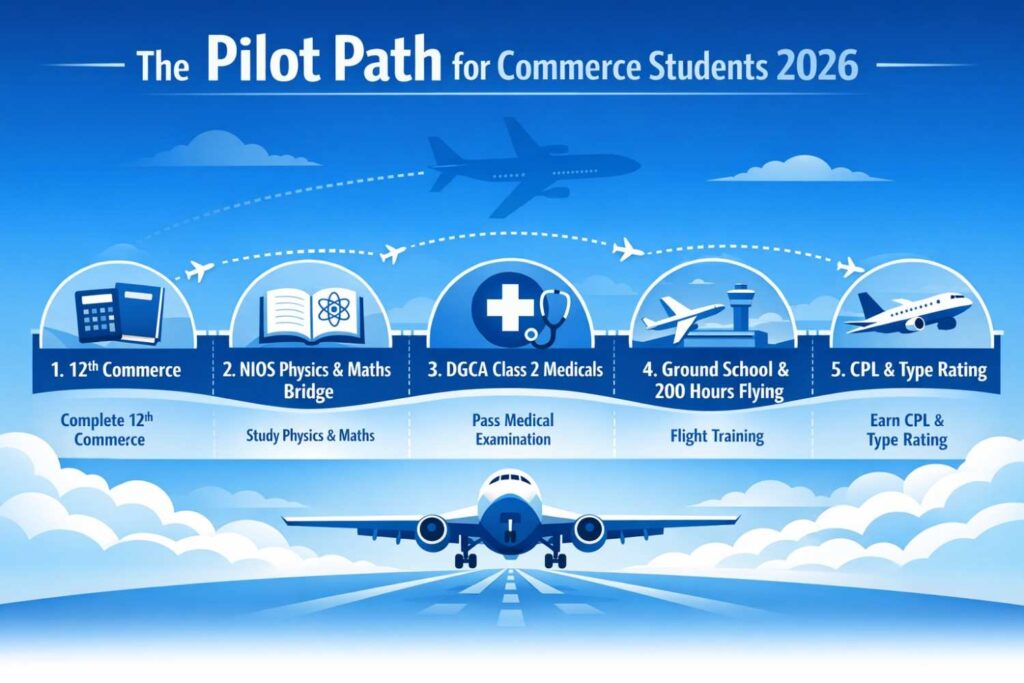
Step-by-Step Process: How to Become a Commercial Pilot After Commerce
Becoming a pilot is a marathon, not a sprint. For a commerce student, the journey follows a specific set of milestones.
1. Medical Fitness (The First Filter)
Before spending a single rupee on an aviation training academy, you must ensure you are fit to fly. The pilot medical test in India consists of two stages:
- Class 2 Medical: Conducted by private DGCA-authorised doctors. This is your initial clearance.
- Class 1 Medical: Conducted at Air Force or specialised civil centres. This is mandatory for the issuance of a CPL.
2. The Computer Number
You must register on the eGCA portal to get your “Computer Number.” This is your permanent ID for all future exams and license applications.
3. DGCA Ground Classes
This is where the real academic work begins. You must clear theory papers in Navigation, Meteorology, Air Regulations, and Technical subjects. Enrolling in professional DGCA ground classes is highly recommended for commerce students to grasp the technical concepts of flight.
4. Flying Training
Once you have your medicals and have started your CPL exam preparation, you join a flying school. You need to log 200 hours of flying time, including:
- Solo flights
- Cross-country navigation
- Night flying
- Instrument flying
5. Type Rating
After getting your CPL, you aren’t yet ready to fly a passenger jet. You must complete an Airbus A320 type rating course (or Boeing equivalent). This is an intensive 6–8 week program where you learn to handle a specific commercial airliner.
Choose your Type Rating based on current fleet trends. As of 2026, with the massive orders for the Airbus A321XLR and Boeing 737 MAX by Indian carriers, specialising in these variants can significantly reduce your ‘wait time’ for an airline seat.
6. Soft Skills
The Commerce Edge in the Cockpit: Don’t view your background as a hurdle. Commerce students often excel in Crew Resource Management (CRM) and Aviation Management. Your understanding of economics helps in grasping ‘Fuel Management’ and ‘Cost-Index’ flying—vital skills for modern captains who must balance safety with airline efficiency.
Medical Fitness Requirement
A pilot’s career demands stricter health standards than most professions. You’ll need to clear two key medical assessments: DGCA Class 2 and DGCA Class 1 medical examinations at different stages.
Comparison: Pilot Training vs. Traditional Commerce Careers (2026)
| Feature | Commercial Pilot | Chartered Accountant (CA) | MBA (Finance/Marketing) |
| Academic Focus | Technical/Applied Physics | Auditing/Taxation | Management/Strategy |
| Training Duration | 18–24 Months | 4–5 Years | 2 Years (Post-Grad) |
| Starting Salary | ₹1.5L – ₹2.5L /mo | ₹60k – ₹1.2L /mo | ₹80k – ₹1.5L /mo |
| ROI Speed | Rapid (High pay early) | Moderate | Moderate to High |
| Work Environment | Cockpit/Global Travel | Office/Corporate | Corporate/Hybrid |
The Financial Reality: Pilot Training Cost in India
Let’s address the elephant in the room. Unlike a B.Com or CA course, pilot training requires significant upfront capital. In 2026, the pilot training cost in India usually ranges between ₹50 Lakhs and ₹80 Lakhs. Budget for ₹65 Lakhs to ₹95 Lakhs for a full ‘Whitetail’ path (CPL + Type Rating + RTR). Additionally, mention Education Loans for Pilots. In 2026, banks like SBI and HDFC have specialised ‘Scholar Loan’ schemes for premier flying schools (like IGRUA or NFTI) that offer up to ₹50 Lakhs without collateral.
What determines the cost?
- Location: Training in India vs. the USA, New Zealand, or South Africa.
- Fuel Prices: Flying hours are directly impacted by aviation fuel costs.
- Cadet Programs: Programs like the Air India or IndiGo Cadet Pilot Programme cost more (up to ₹1.2 Cr) but offer a “Letter of Intent” (job assurance) at the start.
Pilot Salary in India
The pilot’s salary in India. A fresher Junior First Officer starts at roughly ₹1.5 Lakh to ₹2.1 Lakh per month. Within 5–6 years, once you become a Captain, salaries can soar to ₹6 Lakh – ₹10 Lakh per month.
Top 5 DGCA-Approved Flying Schools (2026 Recommendation)
Since you asked, here are the schools currently leading the pack in terms of infrastructure and support for non-science backgrounds:
| School Name | Location | Why it’s great for Commerce Students |
| IGRUA | Amethi, UP | The “IIT of Aviation.” Government-run with the highest prestige. |
| NFTI (CAE Gondia) | Maharashtra | High-tech fleet; they have an excellent bridge into airline cadet programs. |
| Dunes Aviation Academy | Gujarat/Rajasthan | Known for fast-tracking hours and strong ground school support. |
| The Bombay Flying Club | Mumbai | Legacy institution with deep industry connections for networking. |
| Asia Pacific Flight Training | Hyderabad | Strategic location and very modern training methodology. |
Conversion Considerations for Non-Science Students
If you choose to do your flying training abroad to save time or money, you will eventually return to India with a foreign license (FAA/EASA).
- License Conversion: You must clear the “Conversion Exams” conducted by the DGCA in India.
- Practical Check-Rides: You will need to perform a few flying hours in Indian airspace to prove your proficiency to local examiners.
- RTR (A) License: This is the radio communication license. It is notorious for being tough, so start your preparation early during your ground school.
Conclusion & Next Steps
The path for a commerce student is slightly longer due to the NIOS bridge, but the destination—the Captain’s seat—is the same. In the 2026 aviation boom, airlines don’t care about your 12th-grade stream; they care about your technical skills, discipline, and safety record.
Your Immediate Action Plan:
- The Medical Check: Find a DGCA Class 2 examiner and book your first medical. Don’t spend on books until you know you’re fit.
- NIOS Registration: If you don’t have PCM, register for the NIOS “On-Demand” exams today.
- Research Academies: Look for an aviation training academy that offers dedicated DGCA ground classes for non-science students.
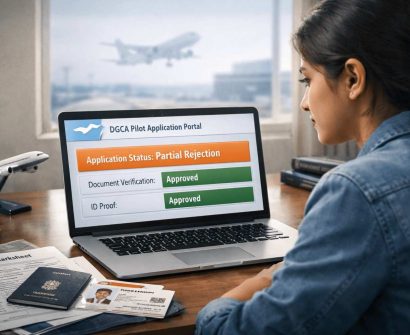
- Apply for your PMK (Personal Medical Record) number on the eGCA portal before booking your Class 2. In 2026, the digital integration is strict; you cannot undergo a medical without an active eGCA profile. Also, ensure your name on your Aadhaar card matches your 10th-grade marksheet exactly to avoid rejection.
FAQ:
Q: Can a commerce student become a pilot in India after 12th?
A: Absolutely. You just need to clear Physics and Mathematics through NIOS or a similar open board to meet the eligibility criteria.
Q: Is maths compulsory for a pilot in India?
A: Yes, Mathematics and Physics are compulsory at the 10+2 level. If you didn’t have them in Commerce, you must pass them separately via NIOS.
Q: How long does it take to become a pilot?
A: For a commerce student, it usually takes 18 to 24 months. This includes the time taken to clear NIOS exams, ground classes, and 200 hours of flight training.
Q: Can I become a pilot without maths?
A: You cannot hold a CPL without a 10+2 marksheet that includes Mathematics. However, you can start your medicals and research while you clear the subject through NIOS.
Q: What are the flying school admission requirements?
A: You need a 10+2 marksheet (PCM), a Class 2 medical certificate, and a valid passport. Most schools also conduct a basic aptitude test.
Q: Is pilot training very difficult for commerce students?
A: Not necessarily. While the technical subjects involve math and physics, they are “applied” concepts (like calculating fuel or wind drift) rather than abstract theory. With good DGCA ground classes, most commerce students excel.
Q: Does Air India or IndiGo hire commerce students?
A: Absolutely. Airlines only care about your CPL, Type Rating, and performance in their selection tests. Your 12th-grade stream does not matter as long as you have the required PCM marksheet.