Currently Empty: ₹0.00
GD & PI Airline Preparation Classes: Ultimate 2026 Guide to Crack Airline Interviews
April 15, 2026
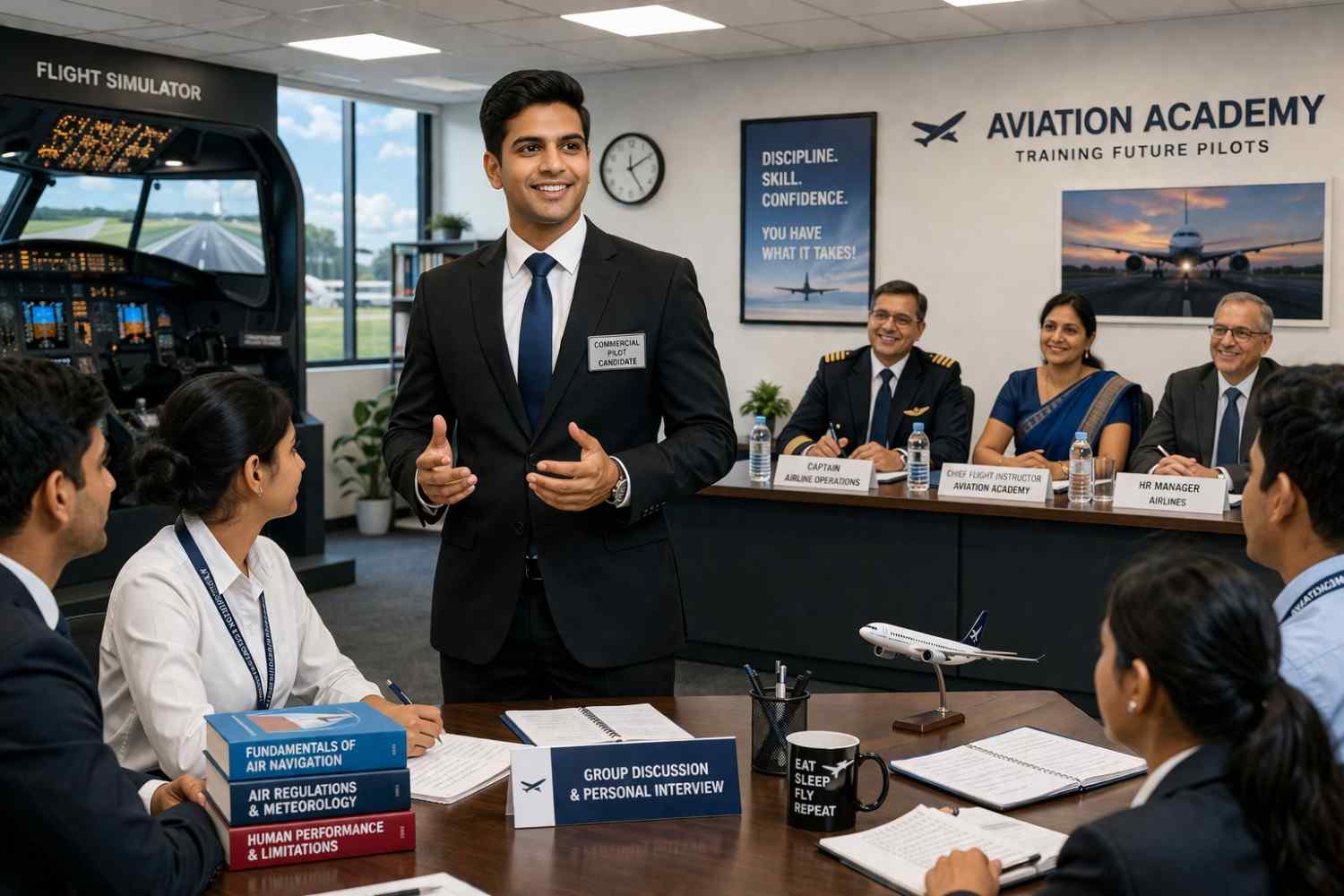
You’re flying hours, months buried in navigation charts, and have successfully cleared your DGCA ground classes exams. But there is one final, formidable hurdle between you and the cockpit: the boardroom interview. GD & PI (Group Discussion and Personal Interview) airline preparation classes are specialised coaching programs that train aspiring pilots to demonstrate “Command Presence,” communication clarity, and emotional stability. In 2026, when technical skills are often taken for granted, these classes are the deciding factor in whether you receive a Golden Letter or a rejection email.
The aviation industry in 2026 is witnessing an unprecedented hiring boom, with Indian carriers placing record-breaking aircraft orders. However, with massive demand comes massive competition. Airlines have moved beyond simple technical quizzes; they now use sophisticated psychological profiling and behavioural assessments to find the “right fit.” This guide will break down how to master this phase and why professional coaching is no longer optional.
Why 2026 is the Most Competitive Year for Airline Hiring
In 2026, the Indian aviation landscape has transformed. With the merger of major airlines and the rapid expansion of low-cost carriers, the recruitment process has become highly digitised and psychologically driven. Airlines are no longer just hiring “pilots”; they are hiring future Captains who can manage a multi-million dollar asset and 180+ lives under extreme stress.
The Shift in Airline Expectations
Today, airlines prioritise Crew Resource Management (CRM) from day one. During the selection process, assessors look for:
- Adaptability: How you handle a sudden change in a Group Discussion topic.
- Emotional Intelligence: Your ability to stay calm when an interviewer grills you on a technical failure.
- Cultural Fit: Whether your values align with the airline’s safety-first culture.
Because of this, many candidates who are technically brilliant fail the interview because they appear arrogant or struggle to communicate effectively in a team. This is precisely where a dedicated aviation training academy steps in to refine your soft skills.
Understanding the GD & PI Selection Process
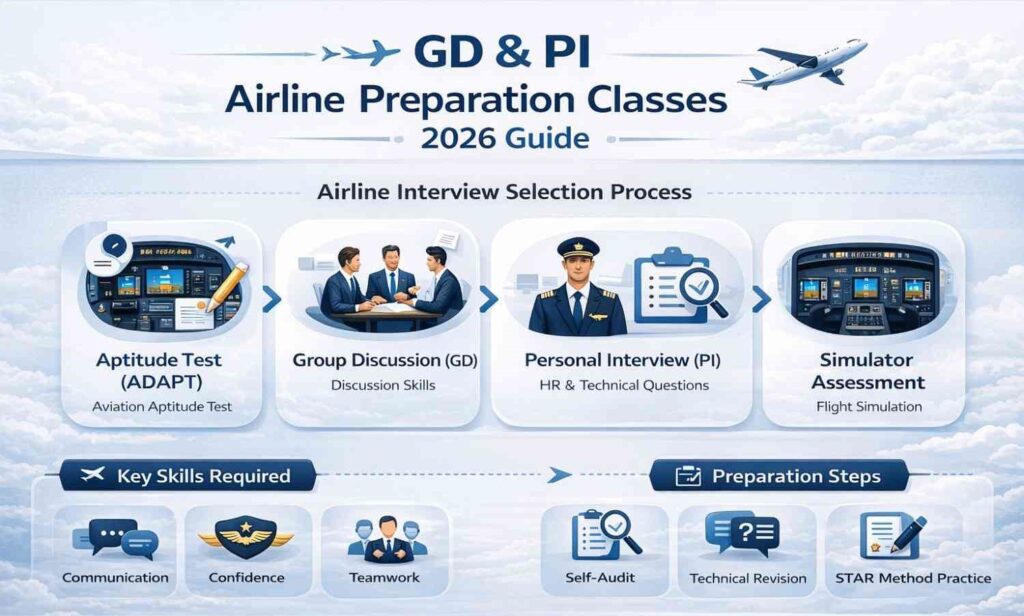
The selection process is usually a multi-stage battery. Before you even reach the Group Discussion, most airlines will put you through the adapt aviation test. This computerised test measures your cognitive load, multitasking, and personality traits. Once you clear that, you enter the “Human Element” phase: GD and PI.
Group Discussion (GD)
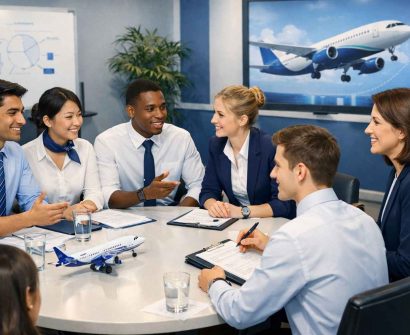
The GD is not a debate; it is a simulation of a cockpit environment. The assessors are watching how you interact with others.
- The Goal: To see if you can lead without being a dictator and follow without being a bystander.
- 2026 Trend: Airlines are now using “Case Study” GDs where you must solve a situational problem (like a fuel emergency or a disruptive passenger) as a group.
Personal Interview (PI)
The PI is usually divided into two parts: Technical and HR.
- Technical PI: Expect deep dives into your aircraft systems, weather charts, and updated DGCA regulations.
- HR PI: This is where they ask the “Why should we hire you?” and “Tell us about a mistake you made” questions. They are looking for honesty, humility, and professional ambition.
Read More: Indigo GD & PI Secrets: How Smart Candidates Predict Their Group & Win Easily
Key Modules Covered in GD & PI Classes
A professional preparation course isn’t just a mock interview; it’s a total personality overhaul. Here is what you can expect from high-quality GD & PI airline preparation classes:
- Communication Skills: Eliminating “fillers” (uhm, ah, like) and developing a clear, authoritative tone.
- Body Language: Mastering the “Pilot Walk,” posture, and hand gestures that convey confidence without appearing stiff.
- Psychometric Alignment: Learning how to answer behavioural questions so they match the results of your adapt aviation test.
- Mock Board Interviews: Facing a panel of retired Captains and HR managers who simulate the exact pressure of a real airline interview.
- Current Affairs & Industry Knowledge: Staying updated on 2026 aviation trends, such as sustainable aviation fuel (SAF) and new airspace regulations.
Comparison: Professional Coaching vs. Self-Study
| Feature | Professional GD & PI Classes | Self-Study |
| Feedback | Objective, expert feedback from former Captains. | Subjective and often biased self-assessment. |
| Environment | Simulated high-pressure boardroom settings. | Comfortable, low-pressure home environment. |
| Resources | Access to 2026 airline-specific question banks. | Outdated online forums and YouTube videos. |
| Team Practice | Real-time Group Discussions with peers. | No way to simulate group dynamics alone. |
| Success Rate | Significantly higher (est. 85% for coached students). | Variable and often requires multiple attempts. |
Step-by-Step Process to Ace Your Airline Interview
Cracking the interview is a marathon, not a sprint. Follow this step-by-step roadmap used by top-tier preparation academies:
- Phase 1: Self-Audit (Weeks 1-2): Record yourself answering basic questions. Identify your nervous tics. This is the “base” your coaches will work from.
- Phase 2: Technical Refresh (Weeks 3-4): Before you can talk about being a pilot, you must know the science. Re-brush your knowledge of aerodynamics and the adapt aviation test logic.
- Phase 3: The Group Dynamic (Weeks 5-6): Participate in at least 10–15 mock GDs. Practice “entering” a conversation politely and “summarising” the group’s points.
- Phase 4: The STAR Method (Weeks 7-8): Learn to answer HR questions using the Situation, Task, Action, Result framework. This ensures your stories are logical and impactful.
- Phase 5: The Final Polish (Week 9): Dress in your full interview suit, including the tie and polished shoes, for a final mock board.
Conversion Considerations: Choosing the Right Academy
coaching centres are created. When looking for an aviation training academy for interview prep, consider the following:
- Instructor Pedigree: Are the teachers former airline recruiters or retired check pilots?
- Recent Successes: Ask for a list of students who cleared airline interviews in the last three months of 2026.
- Personalised Attention: Avoid “factory” schools with 50 students in a batch. For PI prep, you need one-on-one time.
- Psychometric Focus: Ensure they provide specific training for the Adapt Aviation test, as this is now the foundation of the HR interview.
Conclusion & Next Steps
The cockpit door is open wider than ever in 2026, but only for those who can prove they are more than just “stick-and-rudder” pilots. Mastering the Group Discussion and Personal Interview is about demonstrating that you are a safe, reliable, and professional communicator.
A professional aviation training academy provides the mirror you need to see your flaws and the tools you need to fix them. Don’t leave your career to chance after spending years on your flight training.
Your Next Steps:
- Assess: Take a mock psychometric test to see your baseline profile.
- Research: Find a GD & PI class that specialises in the specific airline you are targeting (e.g., IndiGo, Air India, or Akasa).
- Practice: Start reading an aviation editorial daily to improve your vocabulary and industry awareness.
- Enroll: Join a batch at least two months before your expected interview date.
Ready to fly? Secure your seat by mastering the interview today.
FAQ
Q1: Is GD & PI preparation necessary if I have a high flight hour count?
A: Yes. In 2026, airlines rejected candidates with 2,000+ hours because they failed the CRM and behavioural assessment. Your hours get you the interview; your personality gets you the job.
Q2: What is the most common reason for failing an airline GD?
A: Dominating the conversation or being too silent. Airlines want “team players.” If you don’t let others speak, you are seen as a safety risk in a multi-crew cockpit.
Q3: How long does a typical GD & PI preparation course last?
A: Most intensive courses last between 4 and 6 weeks. This provides enough time for behavioural changes to become natural habits.
Q4: Does the ADAPT aviation test influence the interview?
A: Absolutely. The HR manager often has your adapt aviation test report in front of them. If the test says you are “impulsive” and you act “calm” in the interview, they will dig deeper to find the truth.
Q5: Can freshers clear the interview without coaching?
A: It is possible, but risky. Freshers often lack the “corporate vocabulary” and professional poise that airlines expect. Coaching bridges that maturity gap quickly.