
Currently Empty: ₹0.00
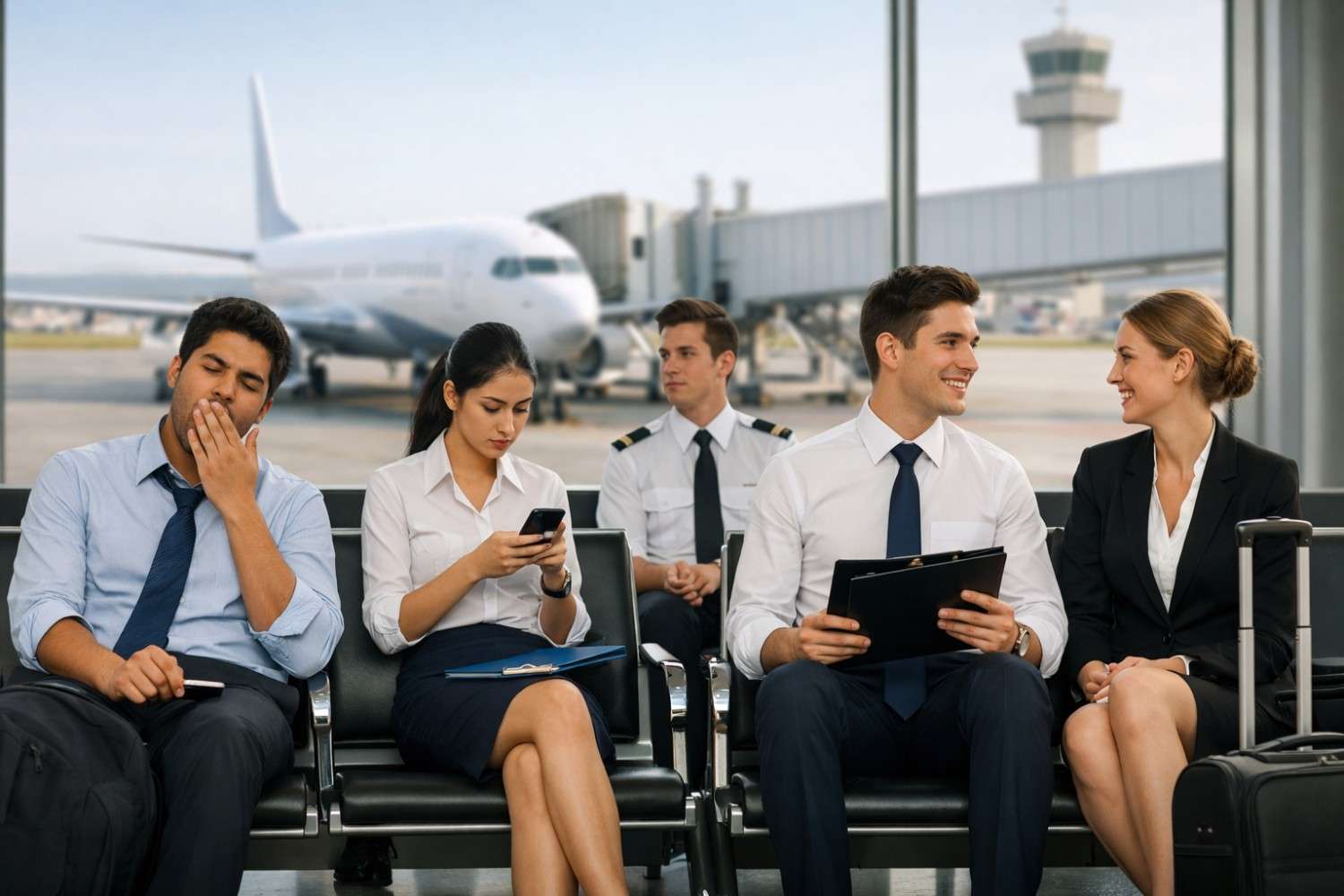
Think your IndiGo interview starts the moment you walk into the cabin with the HR panel? Think again. In the high-stakes world of aviation, “Crew Resource Management” (CRM) begins the second you step onto company property. If you are sitting in the waiting area scrolling dismissively through your phone, ignoring fellow candidates, or showing visible impatience, you might already be on the rejection list. IndiGo interview mistakes often happen before a single question is asked because HR observes your natural behaviour in the waiting room to see if you possess the humility, teamwork, and professional attitude required for a 35,000-foot office.
The “Silent” Assessment: What HR Observes Before the Interview Starts
In 2026, the IndiGo recruitment process has become incredibly sophisticated. While you may have aced your adapt aviation test or scored high on the adapt psychometric test at your aviation training academy, those are just data points. The airline wants to see the human behind the score. The waiting room is effectively a “live” personality assessment.
HR Observation in Interview Waiting Areas
Airlines often plant “silent observers” or use CCTV and front-desk feedback to monitor candidate behaviour. They are looking for:
- Interpersonal Skills: Are you greeting others? A pilot or cabin crew member who can’t initiate a polite conversation in a waiting room will struggle with cockpit communication or passenger service.
- Stress Management: Interviews are delayed. It’s part of the industry. How you handle a two-hour wait—whether with grace or visible frustration—tells HR how you’ll handle a flight delay.
- Grooming Standards: Maintaining your grooming standards for an airline interview for six hours of waiting is a test of endurance. Does your tie stay straight? Is your hair still neat?
The “Competitor vs. Colleague” Trap
A major professional attitude in the airline selection process pitfalls is seeing other candidates as enemies. In aviation, the person sitting next to you is your potential First Officer or Cabin Lead. If you are cold or arrogant toward them, you are failing the CRM test. HR wants to hire people who build others up, not those who isolate themselves to look “focused.”
Step-by-Step: How to Behave in the Airline Interview Waiting Area
To avoid common interview rejection reasons, you need a strategy for the time spent outside the interview room. Here is the step-by-step process to mastering waiting room etiquette:
- The Arrival: Arrive 20 minutes early. Treat the security guard and the receptionist with the same respect you would give the CEO. Their feedback often reaches the HR desk.
- The Digital Detox: Put your phone away. Looking at your phone makes you appear unapproachable and disinterested. Instead, carry a notepad or aviation-related reading material.
- Active Engagement: Engage in light, professional conversation with fellow candidates. This showcases your communication skills in an interview and proves you are a team player.
- Body Language Mastery: Sit upright. Avoid crossing your arms or slouching. Your interview body language should radiate “quiet confidence” rather than nervous energy or boredom.
- The Observation Phase: Watch how the airline staff interacts. It gives you cues about the company culture that you can use during your HR round.
Professional Etiquette Checklist
- Voice Level: Speak softly. Loud laughter or boisterous talk in the waiting area is seen as a lack of interview etiquette.
- Space Management: Don’t sprawl your bags over multiple seats. Be mindful of others’ comfort.
- The Exit: Even if you think you bombed the round, leave the waiting area with a smile and a “thank you” to the staff. Rejections are sometimes overturned, but bad behaviour is permanent.
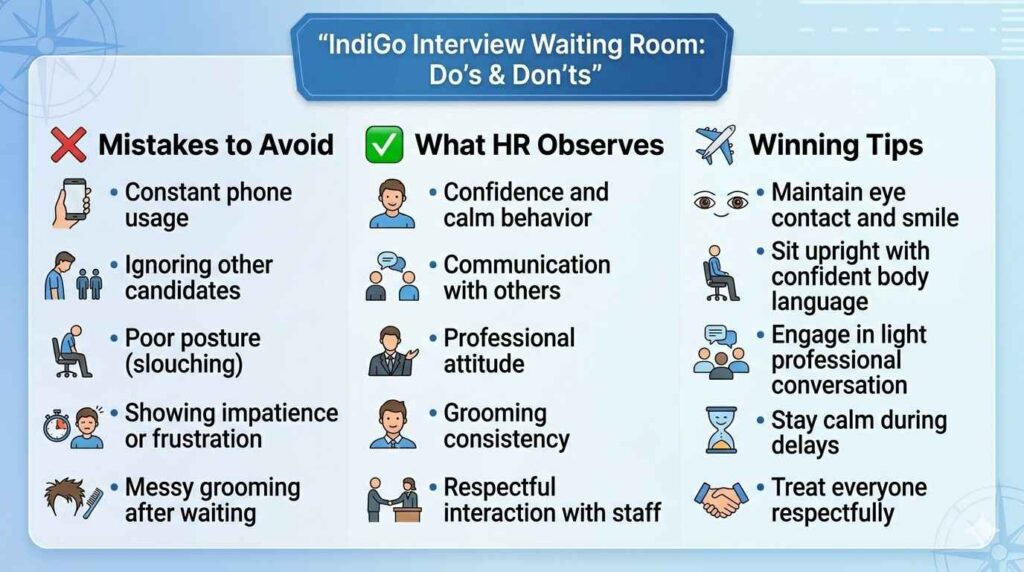
Why Candidates Get Rejected in the IndiGo Interview Waiting Room
You might have a perfect CPL exam preparation record, but aviation is 10% flying and 90% personality. Why candidates get rejected in the IndiGo interview waiting room usually boils down to a lack of “Service Design” and “Safety Culture” mindset.
Personality Assessment in Aviation Interviews
IndiGo looks for “6E” qualities: Efficiency, Eagerness, and Elegance, among others. If you are seen being rude to the person serving water or snapping at a staff member about the AC temperature, you are flagged as high-risk for “Toxic Cockpit Culture.”
Comparison: The Selected vs. The Rejected Candidate
| Feature | The Selected Candidate | The Rejected Candidate |
| Phone Usage | Minimal; used only for essentials. | Constant scrolling/gaming. |
| Social Interaction | Encourages nervous peers. | Ignores others or brags about skills. |
| Body Language | Attentive and upright. | Slouching, yawning, or fidgeting. |
| Reaction to Delays | Calmly reads or observes. | Checks watch frequently; sighs audibly. |
| Grooming | Immaculate from start to finish. | Untidy shirt or loose tie after 1 hour. |
The “Aspirant’s Point”
Many students at an aviation training academy focus 100% on the aptitude psychometric test and 0% on social grace. Remember, the airline is hiring a person they have to spend 4 to 12 hours with in a cramped cockpit or galley. If you aren’t likeable in the waiting room, you won’t be likeable in flight.
Conclusion & Next Steps
Your interview doesn’t happen in a vacuum; it happens in an ecosystem. The waiting room is your first “flight” with IndiGo. By treating every person there as a crew member and every moment as a test of your professional attitude in an interview, you significantly increase your chances of success.
Your Next Steps:
- Mock Waiting Rooms: During your interview preparation tips sessions, practice sitting and interacting professionally for long periods without a phone.
- Grooming Endurance: Wear your full interview attire for 4 hours at home to see where it creases or becomes uncomfortable, then fix it.
- Refine Your Soft Skills: Focus on your communication skills in an interview by practising polite small talk with strangers to build natural ease.
Would you like a specific checklist for the “6E” grooming standards required for the IndiGo Cadet or Cabin Crew interview?
FAQ:
Q: Does IndiGo really check how I behave in the waiting room?
A: Yes. Recruitment staff and even the front-desk personnel often provide feedback on candidate behaviour. Any sign of arrogance or rudeness is a major red flag.
Q: What is the most common IndiGo interview mistake?
A: Lack of humility. Candidates often try too hard to appear “Alpha” and forget that airlines prioritise “Team Players” (CRM) over “Solo Stars.”
Q: How can I show confidence in the interview waiting area?
A: Maintain good posture, offer a genuine smile to others, and stay calm. Confidence isn’t about talking the most; it’s about being comfortable in the environment.
Q: Are grooming standards checked in the waiting room?
A: Absolutely. Your grooming standards for airline interviews are tested by time. If you look “messy” after two hours of sitting, HR assumes you won’t look professional at the end of a long-haul flight.